

Regular Articles

Ecological spatial governance for Beautiful China construction: Mechanism and pathways

  • SONG Jia-peng , 1, 2 ,
  • JIN Xiao-bin , 1, 2, 3 ,
  • ZHU Jun-jun 1 ,
  • ZHOU Yin-kang 1, 3
Expand
  • 1. School of Geography and Ocean Science, Nanjing University, Nanjing 210023, China
  • 2. Observation and Research Station of Land Ecology and Land Use in Chengdu Plain, Ministry of Natural Resources, Chengdu 610045, China
  • 3. Jiangsu Land Consolidation and Ecological Restoration Engineering Research Center, Nanjing 210023, China

Received date: 2025-04-14

  Revised date: 2025-08-20

  Online published: 2026-02-05

Abstract

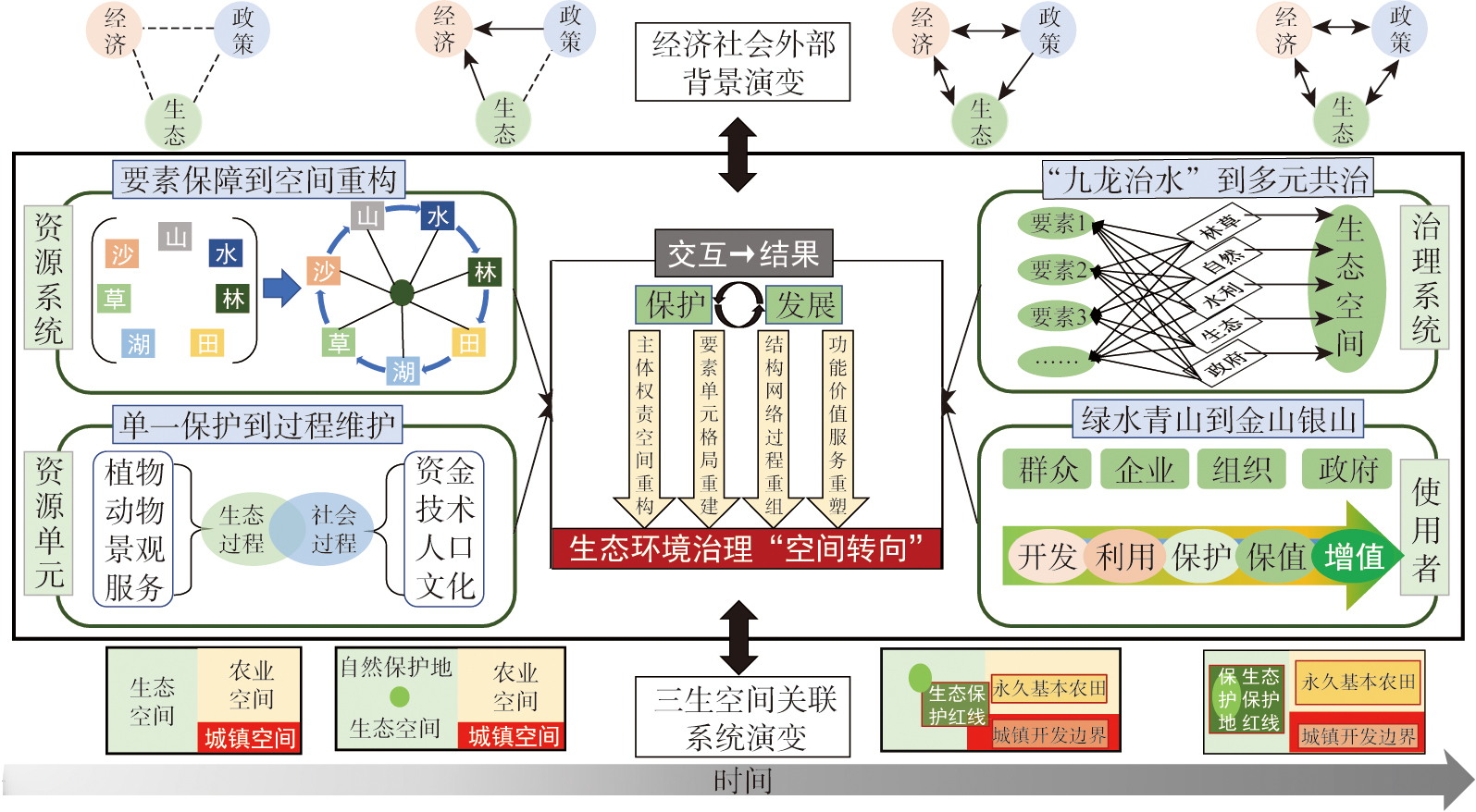
Ecological spatial governance is crucial for modernizing China's governance system and achieving the Beautiful China vision. This study develops an analytical framework to examine its mechanisms and pathways. Key findings include: (1) Eco-environmental governance modernization exhibits a spatial shift, restructuring rights, patterns, processes, and services, supporting ecological governance and the Beautiful China strategy. (2) A "conflict-coordination-symbiosis" framework establishes a holistic governance system, balancing spatial-element coordination, structure-function synergy, and value-efficiency integration. (3) Governance is implemented through socio-ecological integration, multi-objective synergy, and stakeholder negotiation, enhancing Beautiful China mechanisms. (4) Cross-tier operational mechanisms enable improved spatial planning, land-use regulation, and ecological restoration, facilitating the Beautiful China goal.
Cite this article

SONG Jia-peng , JIN Xiao-bin , ZHU Jun-jun , ZHOU Yin-kang . Ecological spatial governance for Beautiful China construction: Mechanism and pathways[J]. JOURNAL OF NATURAL RESOURCES, 2026 , 41(3) : 669 -686 . DOI: 10.31497/zrzyxb.20260303

[1]
谭林, 赵蜀蓉, 陈岚. 空间治理赋能乡村转型的内在机理及路径选择. 地理研究, 2024, 43(6): 1572-1590.

DOI

[TAN L, ZHAO S R, CHEN L. The inner mechanism and path selection of rural spatial governance enabling rural transformation. Geographical Research, 2024, 43(6): 1572-1590.]

[2]
田莉, 陶然, 梁印龙. 城市更新困局下的实施模式转型: 基于空间治理的视角. 城市规划学刊, 2020, (3): 41-47.

[TIAN L, TAO R, LIANG Y L. Transition of implementation pattern in the predicament of urban renewal: A perspective of spatial governance. Urban Planning Forum, 2020, (3): 41-47.]

[3]
岳文泽, 钟鹏宇, 夏皓轩, 等. 国土空间治理现代化: 理论逻辑与实现路径. 中国土地科学, 2024, 38(12): 1-9.

[YUE W Z, ZHONG P Y, XIA H X, et al. Modernization of territorial spatial governance: Theoretical logic and implementation pathways. China Land Science, 2024, 38(12): 1-9.]

[4]
戈大专, 陆玉麒. 面向国土空间规划的乡村空间治理机制与路径. 地理学报, 2021, 76(6): 1422-1437.

DOI

[GE D Z, LU YQ. Rural spatial governance for territorial spatial planning in China: Mechanisms and path. Acta Geographica Sinica, 2021, 76(6): 1422-1437.]

DOI

[5]
彭建, 吕丹娜, 董建权, 等. 过程耦合与空间集成: 国土空间生态修复的景观生态学认知. 自然资源学报, 2020, 35(1): 3-13.

DOI

[PENG J, LYU D N, DONG J Q, et al. Processes coupling and spatial integration: Characterizing ecological restoration of territorial space in view of landscape ecology. Journal of Natural Resources, 2020, 35(1): 3-13.]

DOI

[6]
PALFREY R, OLDEKOP J A, HOLMES G. Privately protected areas increase global protected area coverage and connectivity. Nature Ecology & Evolution, 2022, 6(6): 730-737.

[7]
STRASSBURG B B N, IRIBARREM A, BEYER H L, et al. Global priority areas for ecosystem restoration. Nature, 2020, 586(7831): 724-729.

DOI

[8]
SAURA S, PASCUAL-HORTAL L. A new habitat availability index to integrate connectivity in landscape conservation planning: Comparison with existing indices and application to a case study. Landscape and Urban Planning, 2007, 83(2-3): 91-103.

DOI

[9]
JACKSON A L R. Renewable energy vs. biodiversity: Policy conflicts and the future of nature conservation. Global Environmental Change, 2011, 21(4): 1195-1208.

DOI

[10]
BONTEMPI A, VENTURI P, DEL BENE D, et al. Conflict and conservation: On the role of protected areas for environmental justice. Global Environmental Change, 2023, 82: 102740, Doi: 10.1016/j.gloenvcha.2023.102740.

[11]
林坚, 武婷, 张叶笑, 等. 统一国土空间用途管制制度的思考. 自然资源学报, 2019, 34(10): 2200-2208.

DOI

[LIN J, WU T, ZHANG Y X, et al. Thoughts on unifying the regulation of territorial space use. Journal of Natural Resources, 2019, 34(10): 2200-2208.]

DOI

[12]
喻锋, 李晓波, 张丽君, 等. 中国生态用地研究: 内涵、分类与时空格局. 生态学报, 2015, 35(14): 4931-4943.

[YU F, LI X B, ZHANG L J, et al. Study of ecological land in China: Conception, classification, and spatialtemporal pattern. Acta Ecologica Sinica, 2015, 35(14): 4931-4943.]

[13]
蔡晓梅, 苏杨. 从冲突到共生: 生态文明建设中国家公园的制度逻辑. 管理世界, 2022, 38(11): 131-154.

[CAI X M, SU Y. From conflict to mutualism: The institutional logic of national parks in the construction of ecological civilization. Journal of Management World, 2022, 38(11): 131-154.]

[14]
曹宇, 王嘉怡, 李国煜. 国土空间生态修复: 概念思辨与理论认知. 中国土地科学, 2019, 33(7): 1-10.

[CAO Y, WANG J Y, LI G Y. Ecological restoration for territorial space: Basic concepts and foundations. China Land Science, 2019, 33(7): 1-10.]

[15]
韩博, 金晓斌, 项晓敏, 等. 基于“要素—景观—系统”框架的江苏省长江沿线生态修复格局分析与对策. 自然资源学报, 2020, 35(1): 141-161.

DOI

[HAN B, JIN X B, XIANG X M, et al. Exploration of ecological restoration pattern and countermeasure along the Yangtze River in Jiangsu province based on the "element-landscape-system" framework. Journal of Natural Resources, 2020, 35(1): 141-161.]

DOI

[16]
沈悦, 刘天科, 周璞. 自然生态空间用途管制理论分析及管制策略研究. 中国土地科学, 2017, 31(12): 17-24.

[SHEN Y, LIU T K, ZHOU P. Theoretical analysis and strategies of natural ecological space use control. China Land Sciences, 2017, 31(12): 17-24.]

[17]
金晓斌, 韩博, 李权荃, 等. 面向土地退化中和的国土空间生态修复规划: 逻辑框架与关键问题. 自然资源学报, 2025, 40(2): 287-301.

DOI

[JIN X B, HAN B, LI Q Q, et al. Territorial ecological restoration planning towards land degradation neutrality: Logical framework and key issues. Journal of Natural Resources, 2025, 40(2): 287-301.]

DOI

[18]
王金南, 秦昌波, 薛强, 等. 生态文明视角下的美丽中国建设研究:回顾与展望. 中国环境科学, 2025, 45(2): 1136-1147.

[WANG J N, QIN C B, XUE Q, et al. Research on the Beautiful China initiative from the perspective of ecological civilization: A review and future prospects. China Environmental Science, 2025, 45(2): 1136-1147.]

[19]
OSTROM E. A general framework for analyzing sustainability of social-ecological systems. Science, 2009, 325(5939): 419-422.

DOI PMID

[20]
黄群慧. 中国共产党领导社会主义工业化建设及其历史经验. 中国社会科学, 2021, (7): 4-20, 204.

[HUANG Q H. CPC-led socialist industrialization and its historical experience. Social Sciences in China, 2021, (7): 4-20, 204.]

[21]
李剑林. 基于发展观演变的中国区域经济发展战略及空间格局调整. 经济地理, 2007, 27(6): 896-899, 903.

[LI J L. The adjustment of the development strategy and space pattern of China regional economy based on evolving in the development outlook. Economic Geography, 2007, 27(6): 896-899, 903.]

[22]
王金南, 董战峰, 蒋洪强, 等. 中国环境保护战略政策70年历史变迁与改革方向. 环境科学研究, 2019, 32(10): 1636-1644.

[WANG J N, DONG Z F, JIANG H Q, et al. Historical evolution and reform of China's environmental strategy and policy during the past seventy years (1949-2019). Research of Environmental Sciences, 2019, 32(10): 1636-1644.]

[23]
刘卫东, 张国钦, 宋周莺. 经济全球化背景下中国经济发展空间格局的演变趋势研究. 地理科学, 2007, 27(5): 609-616.

[LIU W D, ZHANG G Q, SONG Z Y. Trend of spatial configuration evolvement of economic development in China under globalization. Scientia Geographica Sinica, 2007, 27(5): 609-616.]

DOI

[24]
潘文卿. 中国的区域关联与经济增长的空间溢出效应. 经济研究, 2012, 47(1): 54-65.

[PAN W Q. Regional linkage and the spatial spillover effects on regional economic growth in China. Economic Research Journal, 2012, 47(1): 54-65.]

[25]
侯鹏, 高吉喜, 陈妍, 等. 中国生态保护政策发展历程及其演进特征. 生态学报, 2021, 41(4): 1656-1667.

[HOU P, GAO J X, CHEN Y, et al. Development process and characteristics of China's ecological protection policy. Acta Ecologica Sinica, 2021, 41(4): 1656-1667.]

[26]
锁利铭, 冷雪忠. 中国区域环境协同治理的“适应性嵌套”逻辑: 基于社会生态系统框架的分析. 理论与改革, 2024, (5): 109-128.

[SUO L M, LENG X Z. The logic of "adaptive nesting" in China's regional environmental co-governance: An analysis based on the framework of social-ecological system. Theory and Reform, 2024, (5): 109-128.]

[27]
谭荣, 沈镭, 邱少俊, 等. 新时期自然资源资产产权制度改革的实践进展与理论意义. 自然资源学报, 2024, 39(11): 2525-2540.

DOI

[TAN R, SHEN L, QIU S J, et al. The progress and value of reforming natural resource property rights in the New Era. Journal of Natural Resources, 2024, 39(11): 2525-2540.]

DOI

[28]
谭荣. 自然资源资产产权制度改革和体系建设思考. 中国土地科学, 2021, 35(1): 1-9.

[TAN R. On the reform and construction of the property right system of natural resources assets. China Land Science, 2021, 35(1): 1-9.]

[29]
彭建, 吕丹娜, 张甜, 等. 山水林田湖草生态保护修复的系统性认知. 生态学报, 2019, 39(23): 8755-8762.

[PENG J, LYU D N, ZHANG T, et al. Systematic cognition of ecological protection and restoration of mountains-rivers-forests-farmlands-lakes-grasslands. Acta Ecologica Sinica, 2019, 39(23): 8755-8762.]

[30]
张杨, 杨洋, 江平, 等. 山水林田湖草生命共同体的科学认知、路径及制度体系保障. 自然资源学报, 2022, 37(11): 3005-3018.

DOI

[ZHANG Y, YANG Y, JIANG P, et al. Scientific cognition, path and governance system guarantee of the Life Community of Mountains, Rivers, Forests, Fields, Lakes and Grasses. Journal of Natural Resources, 2022, 37(11): 3005-3018.]

DOI

[31]
MCGINNIS M D, OSTROM E. Social-ecological system framework: Initial changes and continuing challenges. Ecology and Society, 2014, 19(2): art30, doi: 10.5751/ES-06387-190230.

[32]
张京祥, 陈浩. 空间治理: 中国城乡规划转型的政治经济学. 城市规划, 2014, 38(11): 9-15.

[ZHANG J X, CHEN H. Spatial governance: Political economy of China's urban and rural planning transformation. City Planning Review, 2014, 38(11): 9-15.]

[33]
余敏江. 复合碎片化: 环境精细化治理为何难以推进? 基于整体性治理视角的分析. 中国行政管理, 2022, (9): 89-96.

[YU M J. Compound fragmentation: Why is environmental governance difficult to be refined? Analysis based on the perspective of holistic governance. Chinese Public Administration, 2022, (9): 89-96.]

[34]
刘珉, 胡鞍钢. 中国式治理现代化的创新实践: 以河长制、林长制、田长制为例. 海南大学学报: 人文社会科学版, 2023, 41(5): 53-65.

[LIU M, HU A G. The innovative practice of the Chinese-style governance modernization: Taking the river chief system, the forest chief system and the field chief system as the examples. Journal of Hainan university: Humanities & Social Sciences, 2023, 41(5): 53-65.]

[35]
詹国彬, 陈健鹏. 走向环境治理的多元共治模式: 现实挑战与路径选择. 政治学研究, 2020, (2): 65-75, 127.

[ZHAN G B, CHEN J P. Towards multiple co-governance model of environmental governance: Realistic challenge and path choice. CASS Journal of Political Science, 2020, (2): 65-75, 127.]

[36]
黄栋, 匡立余. 利益相关者与城市生态环境的共同治理. 中国行政管理, 2006, (8): 48-51.

[HUANG D, KUANG L Y. Stakeholders and the co-governance of urban environment. Chinese Public Administration, 2006, (8): 48-51.]

[37]
YIN C C, ZHAO W W, PEREIRA P. Ecosystem restoration along the "pattern-process-service-sustainability" path for achieving land degradation neutrality. Landscape and Urban Planning, 2025, 253: 105227, doi: 10.1016/j.landurbplan.2024.105227.

[38]
王晨旭, 刘焱序, 于超月, 等. 国土空间生态修复布局研究进展. 地理科学进展, 2021, 40(11): 1925-1941.

DOI

[WANG C X, LIU Y X, YU C Y, et al. Research progress on the arrangement of territorial ecological restoration. Progress in Geography, 2021, 40(11): 1925-1941.]

DOI

[39]
孟鹏, 王庆日, 郎海鸥, 等. 空间治理现代化下中国国土空间规划面临的挑战与改革导向: 基于国土空间治理重点问题系列研讨的思考. 中国土地科学, 2019, 33(11): 8-14.

[MENG P, WANG Q R, LANG H O, et al. Analysis of the challenges and reform orientation of territorial spatial planning system in China under the background of spatial governance system modernization: Reviews from the serial research of territorial spatial governance. China Land Science, 2019, 33(11): 8-14.]

[40]
陈进华. 中国城市风险化: 空间与治理. 中国社会科学, 2017, (8): 43-60, 204-205.

[CHEN J H. Urban risk orientation in China: Space and governance. Social Sciences in China, 2017, (8): 43-60, 204-205.]

[41]
方创琳, 王振波, 刘海猛. 美丽中国建设的理论基础与评估方案探索. 地理学报, 2019, 74(4): 619-632.

DOI

[FANG C L, WANG Z B, LIU H M. Exploration on the theoretical basis and evaluation plan of Beautiful China construction. Acta Geographica Sinica, 2019, 74(4): 619-632.]

DOI

[42]
祁毓, 杨春飞, 陈诗一. 绿色转型发展中的财政激励与协同治理: 来自“山水工程”试点的证据. 经济研究, 2024, 59(10): 132-150.

[QI Y, YANG C F, CHEN S Y. Fiscal incentives and collaborative governance in green transformation and development: A case study of the Shan-Shui Initiative. Economic Research Journal, 2024, 59(10): 132-150.]

[43]
邹庆华, 马黛丹. 生态环境协同治理机制的构建与创新. 哈尔滨工业大学学报: 社会科学版, 2024, 26(1): 122-128.

[ZOU Q H, MA D D. Construction and innovation of ecological environment collaborative governance mechanism. Journal of Harbin Institute of Technology: Social Sciences Edition, 2024, 26(1): 122-128.]

[44]
陈兴宇, 高晓红. 协同治理: 长三角生态环境治理的理论基础与机制创新. 苏州大学学报: 哲学社会科学版, 2024, 45(6): 31-41.

[CHEN X Y, GAO X H. Cooperative governance: Theoretical foundations and mechanism innovations in ecological environment management in the Yangtze River Delta. Journal of Soochow University: Philosophy & Social Science Edition, 2024, 45(6): 31-41.]

[45]
杨保军, 陈鹏, 董珂, 等. 生态文明背景下的国土空间规划体系构建. 城市规划学刊, 2019, (4): 16-23.

[YANG B J, CHEN P, DONG K, et al, Formation of national territory development planning system under the background of ecological civilization. Urban Planning Forum, 2019, (4): 16-23.]

[46]
林坚, 赵晔. 国家治理、国土空间规划与“央地”协同: 兼论国土空间规划体系演变中的央地关系发展及趋向. 城市规划, 2019, 43(9): 20-23.

[LIN J, ZHAO Y. State governance, spatial planning, and "central-local" collaboration: With discussions on the development and trend of the central-local government relationship in the evolution of the spatial planning system. City Planning Review, 2019, 43(9): 20-23.]

[47]
邓红蒂, 袁弘, 祁帆. 基于自然生态空间用途管制实践的国土空间用途管制思考. 城市规划学刊, 2020, (1): 23-30.

[DENG H D, YUAN H, QI F. Thoughts on territorial development regulation based on natural ecological spaces. Urban Planning Forum, 2020, (1): 23-30.]

[48]
彭建, 李冰, 董建权, 等. 论国土空间生态修复基本逻辑. 中国土地科学, 2020, 34(5): 18-26.

[PENG J, LI B, DONG J Q, et al. Basic logic of territorial ecological restoration. China Land Science, 2020, 34(5): 18-26.]

Outlines

/