




JOURNAL OF NATURAL RESOURCES >
Prospects for integrating cultural ecosystem services assessment into territorial planning
Received date: 2023-05-22
Revised date: 2023-11-07
Online published: 2024-01-24
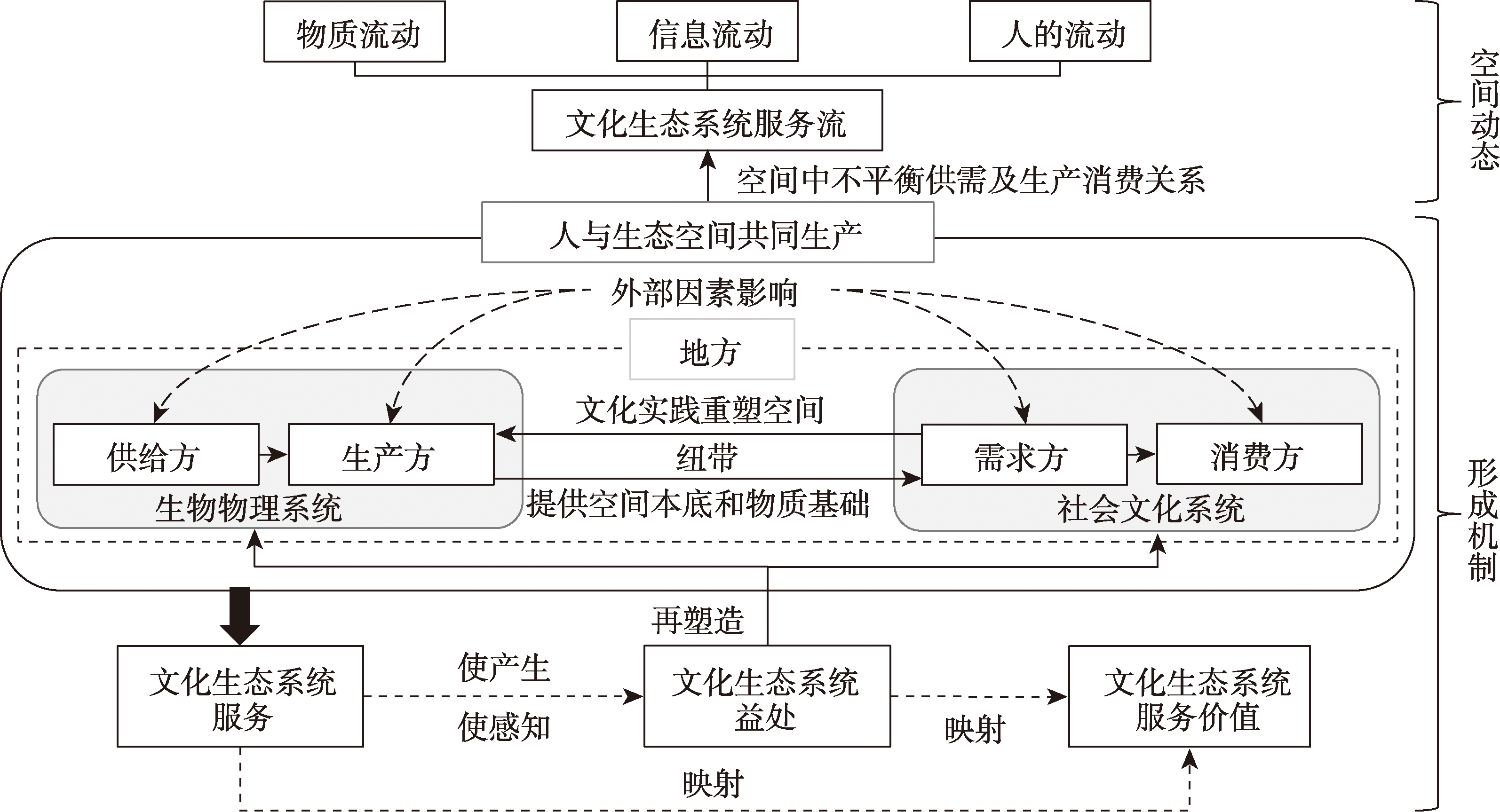
The incorporation of Cultural Ecosystem Services (CES) assessment into territorial planning facilitates a better understanding of the value of ecosystem services and enhances the optimization of ecological spatial arrangement. However, a systematic synthesis and future prospects regarding the application of CES in spatial planning are lacking, thereby impeding its effective implementation in territorial planning. This paper provides a comprehensive overview of the advancements made in CES assessment within spatial planning, both domestically and internationally, over the past decade. The findings indicate that: (1) The theoretical explanation of CES formation is further enhanced from the perspective of relationship and interaction, which considers CES as the manifestation and outcome of human-nature interplay, specifically manifested in the flow of CES among suppliers, producers, demanders, and consumers. (2) The concepts pertaining to CES have undergone refinement, thereby facilitating the development of a more operational and normative theoretical framework for CES assessment. (3) The current approaches for CES assessment primarily encompass three categories: evaluation of ecosystem services, appraisal of ecosystem benefits, and estimation of ecosystem services value. The assessment methods mainly consist of three types: spatial scale-based data acquisition methods, spatial location-based data acquisition methods, and integrated spatial analysis and assessment methods. (4) The combination of CES assessment and planning preparation encompasses two approaches: preceding planning preparation and integrating throughout the entire process of planning preparation. This paper highlights the necessity of integrating CES assessment into China's territorial planning, emphasizing the overall concept and specific application purposes and methods at different planning stages. Furthermore, it anticipates the potential benefits brought by digital transformation.
GUO Yu , ZHANG Min . Prospects for integrating cultural ecosystem services assessment into territorial planning[J]. JOURNAL OF NATURAL RESOURCES, 2024 , 39(2) : 319 -335 . DOI: 10.31497/zrzyxb.20240206
| [1] |
李睿倩, 李永富, 胡恒. 生态系统服务对国土空间规划体系的理论与实践支撑. 地理学报, 2020, 75(11): 2417-2430.
[
|
| [2] |
Millennium Ecosystem Assessment. Ecosystems and Human Well-being:General Synthesis. Washington, DC: Island Press, 2005: 39-40.
|
| [3] |
|
| [4] |
|
| [5] |
|
| [6] |
|
| [7] |
王雨薇, 蔚芳, 周轶男, 等. 空间规划中生态系统服务评估方法研究. 城市发展研究, 2021, 28(5): 19-27, 59.
[
|
| [8] |
|
| [9] |
|
| [10] |
|
| [11] |
|
| [12] |
|
| [13] |
闫水玉, 唐俊. 城市绿色空间生态系统服务供需匹配评估方法: 研究进展与启示. 城市规划学刊, 2022, (2): 62-68.
[
|
| [14] |
|
| [15] |
|
| [16] |
|
| [17] |
|
| [18] |
|
| [19] |
|
| [20] |
|
| [21] |
|
| [22] |
|
| [23] |
|
| [24] |
|
| [25] |
|
| [26] |
|
| [27] |
|
| [28] |
|
| [29] |
|
| [30] |
党辉, 李晶. 基于自然语言处理的城市公园生态系统文化服务感知. 陕西师范大学学报: 自然科学版, 2022, 50(4): 92-102.
[
|
| [31] |
|
| [32] |
|
| [33] |
|
| [34] |
|
| [35] |
|
| [36] |
|
| [37] |
|
| [38] |
|
| [39] |
|
| [40] |
|
| [41] |
|
| [42] |
|
| [43] |
|
| [44] |
|
| [45] |
|
| [46] |
|
| [47] |
张宇硕, 刘博宇, 毕旭, 等. 基于利益相关者感知视角的生态系统服务研究进展. 自然资源学报, 2023, 38(5): 1300-1317.
[
|
| [48] |
|
| [49] |
|
| [50] |
|
| [51] |
|
| [52] |
|
| [53] |
|
| [54] |
|
| [55] |
|
| [56] |
|
| [57] |
申嘉澍, 李双成, 梁泽, 等. 生态系统服务供需关系研究进展与趋势展望. 自然资源学报, 2021, 36(8): 1909-1922.
[
|
| [58] |
|
| [59] |
|
| [60] |
|
| [61] |
|
| [62] |
|
| [63] |
|
| [64] |
|
| [65] |
陶思宇, 周忠学. 基于旗舰物种的生态系统文化服务供需及流研究: 以大熊猫国家公园为例. 生态学杂志, 2022, 41(8): 1643-1652.
[
|
| [66] |
|
| [67] |
|
| [68] |
|
| [69] |
|
| [70] |
|
| [71] |
彭婉婷, 刘文倩, 蔡文博, 等. 基于参与式制图的城市保护地生态系统文化服务价值评价: 以上海共青森林公园为例. 应用生态学报, 2019, 30(2): 439-448.
[
|
| [72] |
|
| [73] |
赵琪琪, 李晶, 刘婧雅, 等. 基于SolVES模型的关中—天水经济区生态系统文化服务评估. 生态学报, 2018, 38(10): 3673-3681.
[
|
| [74] |
|
| [75] |
|
| [76] |
|
| [77] |
李永钧, 张单阳, 王珂, 等. 乡村生态系统文化服务供需关系研究: 以浙江省湖州市为例. 生态学报, 2022, 42(17): 6888-6899.
[
|
| [78] |
|
| [79] |
曹先磊, 刘高慧, 张颖, 等. 城市生态系统休闲娱乐服务支付意愿及价值评估: 以成都市温江区为例. 生态学报, 2017, 37(9): 2970-2981.
[
|
| [80] |
|
| [81] |
|
| [82] |
郭洋, 杨飞龄, 王军军, 等. “三江并流”区游憩文化生态系统服务评价研究. 生态学报, 2020, 40(13): 4351-4361.
[
|
| [83] |
|
| [84] |
|
| [85] |
|
| [86] |
|
| [87] |
|
| [88] |
|
| [89] |
|
| [90] |
|
| [91] |
周昱辰, 尹丹, 黄庆旭, 等. 基于生态系统服务参与式制图的“三生”空间优化建议: 以白洋淀流域为例. 自然资源学报, 2022, 37(8): 1988-2003.
[
|
| [92] |
彭建, 胡晓旭, 赵明月, 等. 生态系统服务权衡研究进展: 从认知到决策. 地理学报, 2017, 72(6): 960-973.
[
|
| [93] |
欧阳晓, 王坤, 魏晓. 城乡建设用地关联对生态系统服务的影响研究: 以洞庭湖地区为例. 生态学报, 2022, 42(21): 8713-8722.
[
|
| [94] |
|
| [95] |
孙佼佼, 郭英之. 自然保护地数字文化生态系统服务质量测度与出游意愿效应: 以中国五地国家公园网络空间为例. 自然资源学报, 2023, 38(4): 983-994.
[
|
| [96] |
|
| [97] |
|
| [98] |
沈丽珍, 顾朝林, 甄峰. 流动空间结构模式研究. 城市规划学刊, 2010, (5): 26-32.
[
|
/
| 〈 |
|
〉 |


