JOURNAL OF NATURAL RESOURCES >
Spatial governance of coastal resource-based cities for high-quality development: From the perspective of cross-system impact
Received date: 2022-03-28
Revised date: 2022-09-08
Online published: 2023-01-28
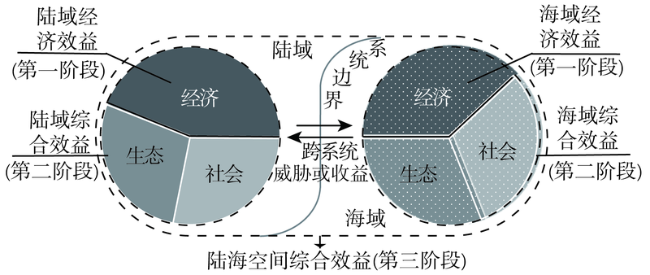
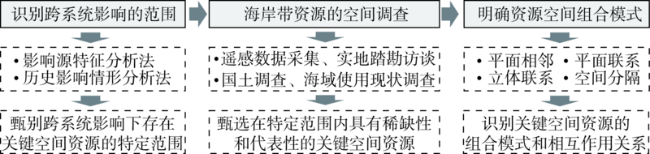
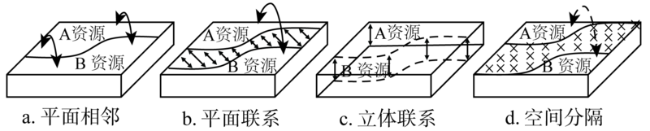
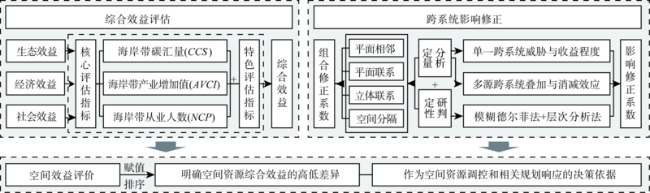
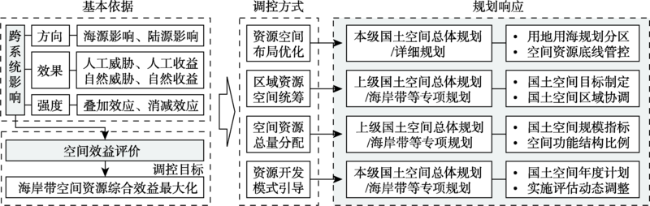
Coastal resource-based cities are spatial carriers with highly intertwined land resources and sea resources. From the perspective of cross-system impact, the spatial governance will help to break through the limitations of the transformation and development of resource-based cities, and maximize the comprehensive efficiency of resources. Firstly, this paper clarifies the complexity of cross-system impact and the diversity of coastal resources, and takes spatial resources as the core element of the study. Secondly, it emphasizes the ecological-economic-social "integrated efficiency" of the whole land and sea system, and takes "land-sea coordination" as a guide to deepen the connotation of high-quality development of coastal resource-based cities. Thirdly, it explores the spatial governance path of "key resource identification-spatial efficiency evaluation-spatial resource regulation" for high-quality development. Concretely, we select key resources by identifying cross-system impact scope, conducting resource spatial surveys, and determining the resource combination mode. Furthermore, a resource spatial efficiency evaluation framework including "comprehensive efficiency evaluation" and "cross-system impact correction" is established to clarify the differences of various spatial efficiencies, and provide a decision-making basis for spatial governance. Finally, according to the results of spatial efficiency evaluation, combined with the requirements of territorial spatial planning, this paper puts forward beneficial regulation and control methods for the high-quality development of coastal resource-based cities, in the four aspects of resource spatial optimization, regional resource integration, total space allocation and development mode guidance.
QUE Quan-hong , WEN Chao-xiang . Spatial governance of coastal resource-based cities for high-quality development: From the perspective of cross-system impact[J]. JOURNAL OF NATURAL RESOURCES, 2023 , 38(1) : 255 -268 . DOI: 10.31497/zrzyxb.20230116
表1 典型跨系统影响范围的确定方式Table 1 Determination method of typical cross-system impact scope |
| [1] |
张永凯, 马国霞. 西北干旱区资源型城市发展与转型研究. 资源科学, 2008, 30(7): 1013-1017.
[
|
| [2] |
潘竟虎, 冯翠芹, 杜怀玉. 干旱区资源型城市可持续发展研究: 以嘉峪关市为例. 干旱区研究, 2007, 30(5): 717-722.
[
|
| [3] |
胡博伟, 周亮, 王中辉, 等. 干旱区资源型城市绿色经济效率时空分异特征. 资源科学, 2020, 42(2): 383-393.
[
|
| [4] |
黄光宇, 林锦玲. 山地资源型城市的生态环境空间控制初探: 以攀枝花市攀密片区为例. 规划师, 2006, (4): 11-14.
[
|
| [5] |
张继飞, 邓伟, 刘邵权. 西南山地资源型城市地域空间发展模式: 基于东川区的实证. 地理科学, 2013, 33(10): 1206-1215.
[
|
| [6] |
罗怀良. 山地资源型城市攀枝花转型发展的地域协同研究. 现代城市研究, 2019, (3): 91-96.
[
|
| [7] |
阎晓, 涂建军. 黄河流域资源型城市生态效率时空演变及驱动因素. 自然资源学报, 2021, 36(1): 223-239.
[
|
| [8] |
卢硕, 张文忠, 李佳洺. 资源禀赋视角下环境规制对黄河流域资源型城市产业转型的影响. 中国科学院院刊, 2020, 35(1): 73-85.
[
|
| [9] |
王晓楠, 孙威. 黄河流域资源型城市转型效率及其影响因素. 地理科学进展, 2020, 39(10): 1643-1655.
[
|
| [10] |
唐山市地方志办公室. 唐山年鉴. 北京: 团结出版社, 2021.
[Local Chronicles Office of Tangshan. Yearbook of Tangshan. Beijing: Unity Press, 2021.]
|
| [11] |
李博, 秦欢, 孙威. 产业转型升级与绿色全要素生产率提升的互动关系: 基于中国116个地级资源型城市的实证研究. 自然资源学报, 2022, 37(1): 186-199.
[
|
| [12] |
付丽明, 雷磊. 沿海地区资源型城市工业结构转型的研究: 以盘锦市为例. 海洋开发与管理, 2012, 29(9): 46-51, 54.
[
|
| [13] |
|
| [14] |
文超祥, 吕一平, 林小如, 等. 跨系统影响视角下海岸带空间规划陆海统筹的内容和方法. 城市规划学刊, 2020, (5): 69-75.
[
|
| [15] |
李平, 丰爱平, 孙惠凤, 等. 海岸侵蚀灾害调查和评价研究进展与展望. 自然灾害学报, 2021, 30(4): 55-63.
[
|
| [16] |
王璐阳, 张敏, 温家洪, 等. 上海复合极端风暴洪水淹没模拟. 水科学进展, 2019, 30(4): 546-555.
[
|
| [17] |
吴辉, 黄君宝. 风暴潮中风与水位非线性作用效应研究. 海洋通报, 2009, 28(3): 16-21.
[
|
| [18] |
秦松. 中国海岸带植物资源. 济南: 山东科学技术出版社, 2013.
[
|
| [19] |
平潭综合实验区党工委管委会. 平潭年鉴. 福州: 福建省地图出版社, 2020.
[Party Working and Management Committee of Pingtan Comprehensive Experimental Zone. Yearbook of Pingtan. Fuzhou: Fujian Map Publishing House, 2020.]
|
| [20] |
段学军, 邹辉, 陈维肖, 等. 岸线资源评估、空间管控分区的理论与方法: 以长江岸线资源为例. 自然资源学报, 2019, 34(10): 2209-2222.
[
|
| [21] |
许学工, 梁泽, 周鑫. 黄河三角洲陆海统筹可持续发展探讨. 资源科学, 2020, 42(3): 424-432.
[
|
| [22] |
胡恒, 徐伟, 岳奇, 等. 基于三生空间的海岸带分区模式探索: 以河北省唐山市为例. 地域研究与开发, 2017, 36(6): 29-33.
[
|
| [23] |
盘锦市档案馆. 盘锦年鉴. 沈阳: 辽海出版社, 2020.
[Panjin City Archives. Yearbook of Panjin. Shenyang: Liaohai Publishing House, 2020.]
|
| [24] |
李彦平, 刘大海, 姜伟, 等. 国土空间规划视角下海洋空间用途管制的关键问题思考. 自然资源学报, 2022, 37(4): 895-909.
[
|
| [25] |
王喜年. SLOSH模式的进一步应用: 西南佛罗里达风暴潮图集. 海洋预报, 1987, (s1): 30-47.
[
|
| [26] |
贾宁, 陶荣幸, 石先武, 等. 风暴潮淹没范围确定方法与应用: 以台风“玛莉亚”风暴潮为例. 海洋开发与管理, 2018, 35(12): 8-10.
[
|
| [27] |
李志强, 陈子燊. 砂质岸线变化研究进展. 海洋通报, 2003, (4): 77-86.
[
|
| [28] |
贾娇, 何萍, 徐杰, 等. 基于海洋对陆地影响的海岸带陆侧边界确定方法. 环境工程技术学报, 2019, 9(4): 421-430.
[
|
| [29] |
崔丹丹, 吕林, 周永, 等. 江苏省海岸侵蚀现状遥感监测与防治对策. 海洋开发与管理, 2021, 38(7): 84-89.
[
|
| [30] |
匡翠萍, 谢华浪, 苏平, 等. 基于FBM法追踪秦皇岛海域赤潮迁移扩散. 中国环境科学, 2016, 36(8): 2505-2515.
[
|
| [31] |
文世勇, 孙田力, 王涛, 等. 基于历史记录的赤潮灾害危险性区划方法的构建与应用. 灾害学, 2022, 37(1): 72-76.
[
|
| [32] |
康敏捷. 环渤海氮污染的陆海统筹管理分区研究. 大连: 大连海事大学, 2013.
[
|
| [33] |
|
| [34] |
吴志强, 刘晓畅, 赵刚, 等. 空间效益导向替代简单扩张: 城市治理关键评价指标. 城市规划学刊, 2021, (5): 15-22.
[
|
| [35] |
张平平, 李艳红, 殷浩然, 等. 中国南北过渡带生态系统碳储量时空变化及动态模拟. 自然资源学报, 2022, 37(5): 1183-1197.
[
|
| [36] |
丁明磊, 杨晓娜, 赵荣钦, 等. 碳中和目标下的国土空间格局优化: 理论框架与实践策略. 自然资源学报, 2022, 37(5): 1137-1147.
[
|
| [37] |
马彬彬, 何钰滢, 戴志军. 流域和河口高强度人类活动对崇明岛滩涂资源变化过程的影响. 自然资源学报, 2022, 37(4): 1025-1035.
[
|
| [38] |
王艳红, 曾成杰, 陆培东, 等. 三亚湾东段海岸侵蚀与海滩养护. 自然资源学报, 2022, 37(4): 1049-1060.
[
|
| [39] |
许妍, 曹可, 李冕, 等. 海岸带生态风险评价研究进展. 地球科学进展, 2016, 31(2): 137-146.
[
|
| [40] |
虞燕娜, 朱江, 吴绍华, 等. 多风险源驱动下的土地生态风险评价: 以江苏省射阳县为例. 自然资源学报, 2016, 31(8): 1264-1274.
[
|
| [41] |
葛天任, 李强. 从“增长联盟”到“公平治理”: 城市空间治理转型的国家视角. 城市规划学刊, 2022, (1): 81-88.
[
|
| [42] |
文超祥, 阙权鸿, 林小如. 基于海湾单元的陆海统筹空间规划研究. 城市发展研究, 2022, 29(1): 27-34.
[
|
/
| 〈 |
|
〉 |