JOURNAL OF NATURAL RESOURCES >
The neural mechanism of food waste behavior in Chinese households from the perspective of gender differences
Received date: 2021-12-12
Revised date: 2022-04-08
Online published: 2022-12-28
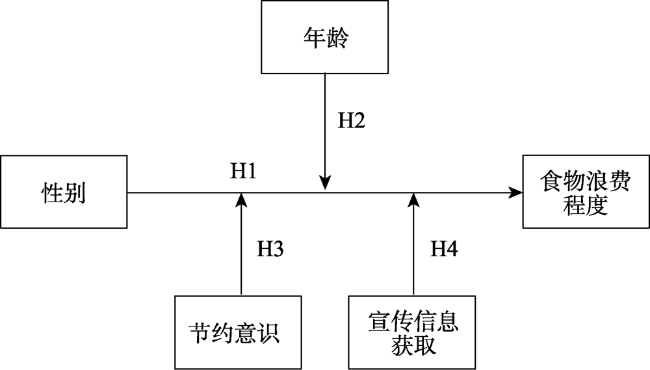
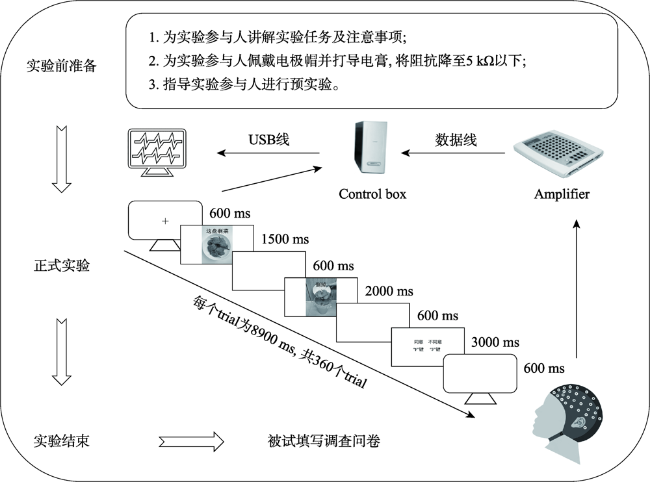
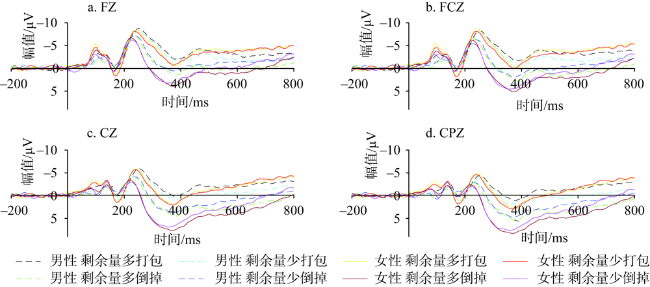
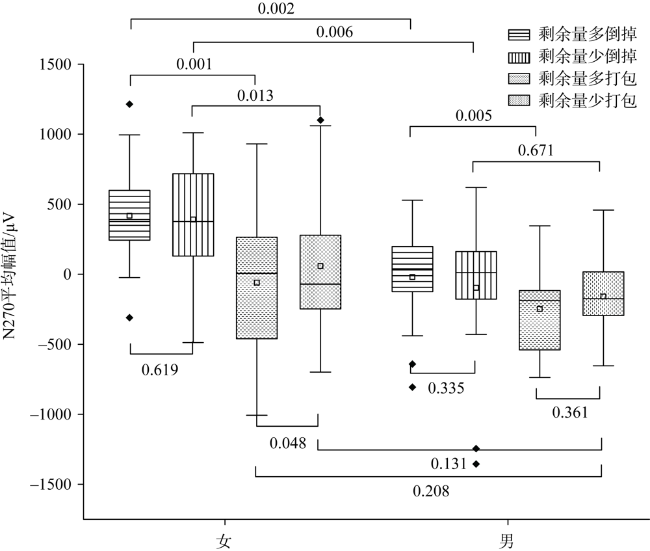
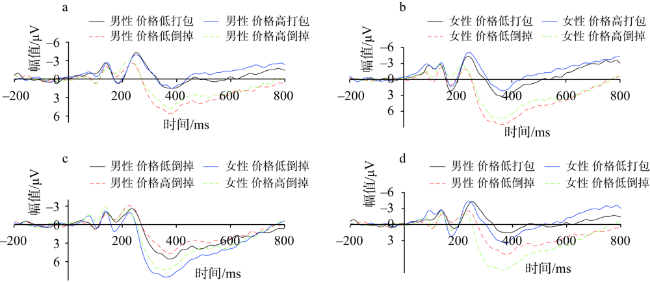
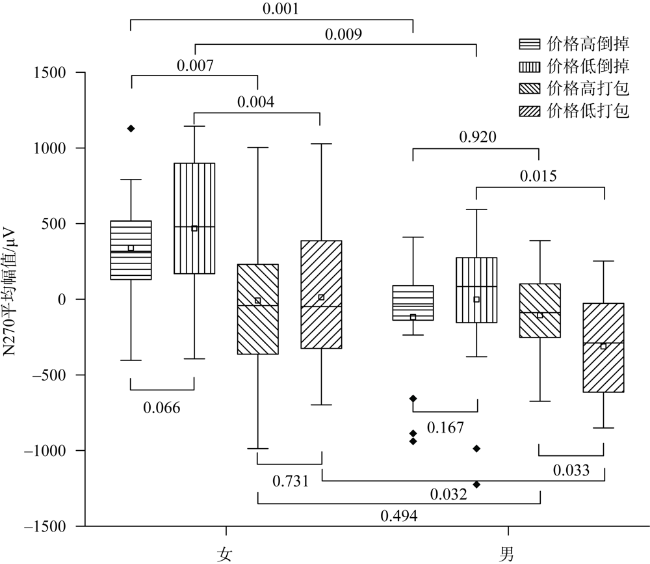
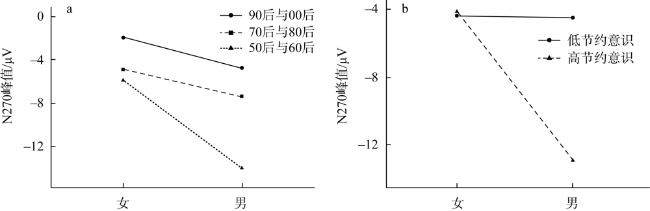
The traditional Chinese family pattern of "the man goes out to work while the woman looks after the household" makes women play a dominant role in family life, so female food waste behavior plays a decisive role in preventing family food waste. Based on the dual-system theory, this paper measures the degree of food waste in different gender groups from the perspective of cognitive neuroscience through event-related potential experiments, and explores the key factors affecting the degree of food waste. The results showed that: (1) There were obvious N270 EEG components in the participants of different genders, indicating that the degree of food waste was higher, and generally, women tend to waste more food than men. (2) Compared with the younger generations, the food waste level of the women who were born in the 1950s and 1960s was significantly lower. (3) Compared with women, men should improve their awareness of saving food, which has a more significant effect on reducing a waste of food. The purpose of this study is to provide theoretical support for the effective implementation of the Anti-food Waste Law from the perspective of gender characteristics.
Key words: food waste; gender difference; saving consciousness; ERP experiment
HOU Cai-xia , ZHANG Meng-meng , ZHAO Xue-yan , ZHANG Meng-jie , GUO Xiao-tong , FU Han-liang . The neural mechanism of food waste behavior in Chinese households from the perspective of gender differences[J]. JOURNAL OF NATURAL RESOURCES, 2022 , 37(10) : 2531 -2543 . DOI: 10.31497/zrzyxb.20221005
表1 主效应和交互效应显著性表Table 1 Significance level of main effect and interaction effect |
| 变量 | F值 | 显著性 |
|---|---|---|
| 性别 | 7.703 | 0.014 |
| 年龄 | 4.527 | 0.021 |
| 节约意识 | 5.445 | 0.028 |
| 宣传信息获取程度 | 1.314 | 0.263 |
| 性别×节约意识 | 6.178 | 0.020 |
| 性别(女)×年龄(50后与60后和90后与00后) | 3.398 | 0.017 |
| [1] |
|
| [2] |
|
| [3] |
张盼盼, 白军飞, 刘晓洁, 等. 消费端食物浪费: 影响与行动. 自然资源学报, 2019, 34(2): 437-450.
[
|
| [4] |
|
| [5] |
|
| [6] |
孙佑海. 《反食品浪费法》: 统筹推进制止餐饮浪费的制度建设. 环境保护, 2021, 49(10): 31-36.
[
|
| [7] |
|
| [8] |
|
| [9] |
王灵恩, 倪笑雯, 李云云, 等. 中国消费端食物浪费规模及其资源环境效应测算. 自然资源学报, 2021, 36(6): 1455-1468.
[
|
| [10] |
李丰, 丁圆元, 蔡荣. 食物转化视角下我国家庭食物浪费程度与影响因素: 基于CHNS数据的实证分析. 自然资源学报, 2021, 36(4): 811-826.
[
|
| [11] |
|
| [12] |
|
| [13] |
钱龙, 李丰, 钱壮. 高校食堂食物浪费的影响因素. 资源科学, 2019, 41(10): 1859-1870.
[
|
| [14] |
|
| [15] |
吴睿, 郭庆科, 李芳. 内隐和外显测量对利他行为的预测: 来自IAT和BIAT的证据. 心理学探新, 2018, 38(4): 356-362.
[
|
| [16] |
|
| [17] |
|
| [18] |
|
| [19] |
|
| [20] |
|
| [21] |
|
| [22] |
张童朝, 颜廷武, 仇童伟. 年龄对农民跨期绿色农业技术采纳的影响. 资源科学, 2020, 42(6): 1123-1134.
[
|
| [23] |
|
| [24] |
|
| [25] |
|
| [26] |
李纪珍, 周江华, 谷海洁. 女性创业者合法性的构建与重塑过程研究. 管理世界, 2019, 35(6): 142-160, 195.
[
|
| [27] |
王建明. 资源节约意识对资源节约行为的影响: 中国文化背景下一个交互效应和调节效应模型. 管理世界, 2013, (8): 77-90, 100.
[
|
| [28] |
成升魁, 白军飞, 金钟浩, 等. 笔谈: 食物浪费. 自然资源学报, 2017, 32(4): 529-538.
[
|
| [29] |
|
| [30] |
|
| [31] |
杨东霞, 韩洁, 王俏, 等. 减少粮食损耗和反对食物浪费的国际经验及对中国的启示. 世界农业, 2021, (6): 62-71.
[
|
| [32] |
|
| [33] |
|
| [34] |
|
| [35] |
王梦, 范为桥, 沈英. 整体型和局部型思维风格的ERP研究. 心理与行为研究, 2019, 17(4): 472-479.
[
|
| [36] |
World Medical Association. World Medical Association Declaration of Helsinki: Ethical principles for medical research involving human subjects. Journal of the American Medical Association, 2013, 310(20): 2191-2194.
|
| [37] |
熊艾伦, 王子娟, 张勇, 等. 性别异质性与企业决策: 文化视角下的对比研究. 管理世界, 2018, 34(6): 127-139, 188.
[
|
| [38] |
|
| [39] |
|
| [40] |
|
| [41] |
|
| [42] |
|
| [43] |
|
/
| 〈 |
|
〉 |