JOURNAL OF NATURAL RESOURCES >
Spatio-temporal differentiation and driving mechanism of rurality in the Yangtze River Economic Belt
Received date: 2020-11-22
Request revised date: 2021-04-29
Online published: 2022-02-16
Copyright
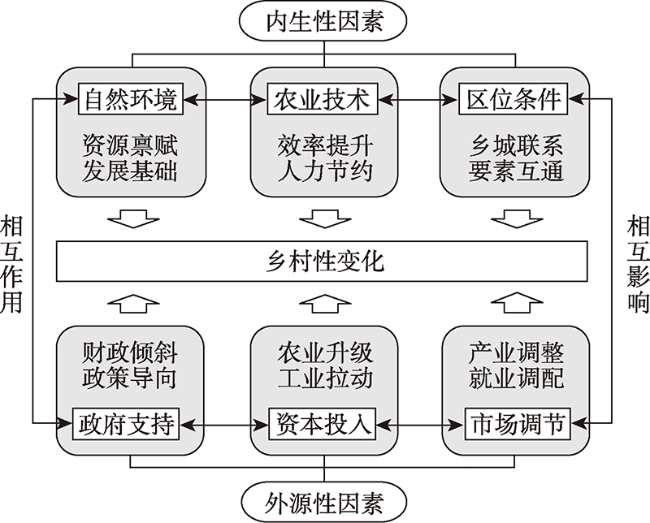
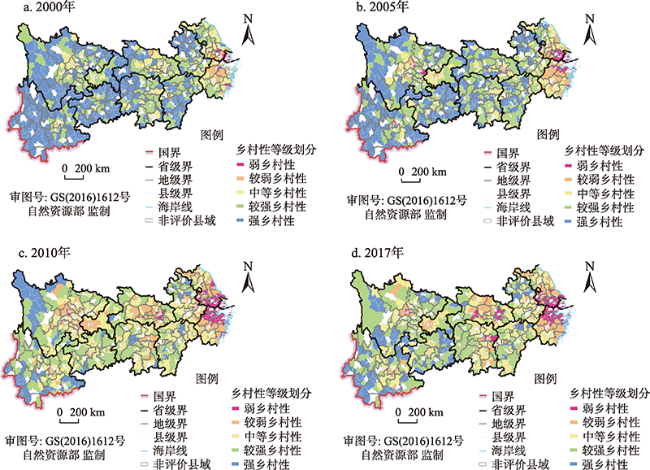
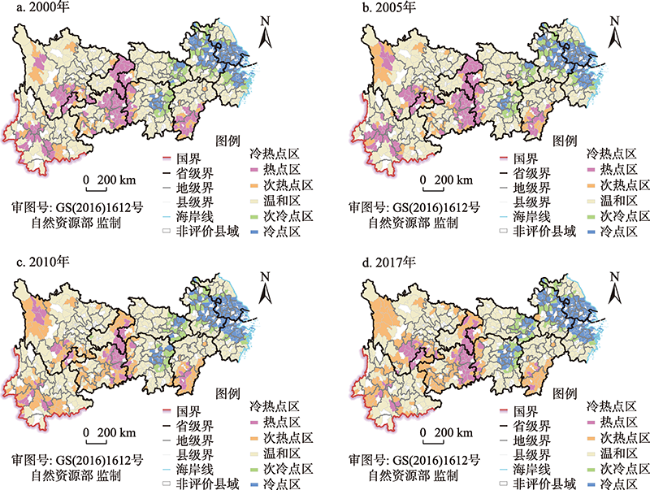
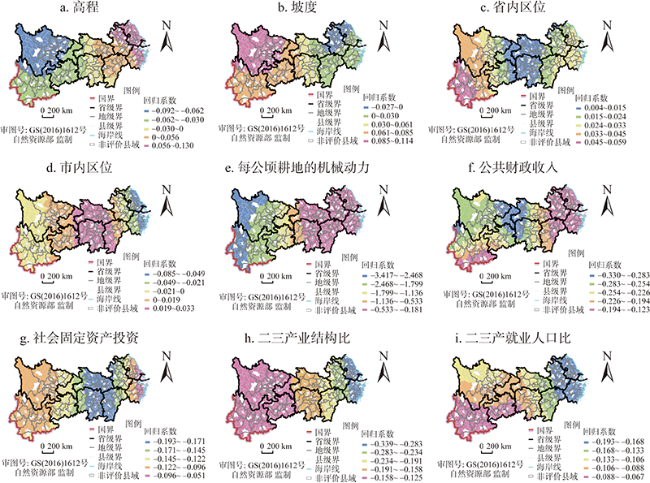
Rurality is an important indicator to describe characteristics of rural areas. Its spatial and temporal distribution can effectively reflect the basic characteristics of rural development and transformation. Based on the measurement of rurality indexes in the years of 2000, 2005, 2010 and 2017, this study mainly uses Exploratory Spatial data Analysis method (ESDA) to explore the spatio-temporal differentiation of the rurality in the Yangtze River Economic Belt, and analyzes the spatial heterogeneity of influencing factors by GWR model. The results show that: (1) Rurality indexes of counties in the study area tend to decline from 2000 to 2017, and the distribution characteristic of rurality indexes presents a pattern of "high in the central and western parts while low in the eastern part"; the counties with low level of rurality are mainly distributed near the urban agglomerations, provincial capitals and big cities, while the counties with high level of rurality are in the peripheral areas. (2) The rurality's high-high agglomeration areas are mainly distributed in the traditional agricultural regions in the central and western parts, and they tend to shrink gradually over time. The rurality's low-low agglomeration areas are concentrated in the Yangtze River Delta, Wuhan Megalopolis Area and Changsha-Zhuzhou-Xiangtan City Group, and the spatial distribution is relatively stable over time. (3) Agricultural technology, government support, capital input and market regulation can promote rural development and transformation, among which agricultural technology plays the most important role. Both natural environment and location have the promoting and limiting effects. Due to different effects of influencing factors on different regions, rural development strategies should be formulated specifically for specific regions in the future.
DONG You-ming , GUO Yan , LI Zhi-gang , LIN Sai-nan . Spatio-temporal differentiation and driving mechanism of rurality in the Yangtze River Economic Belt[J]. JOURNAL OF NATURAL RESOURCES, 2022 , 37(2) : 378 -395 . DOI: 10.31497/zrzyxb.20220208
表1 长江经济带乡村性评价指标体系Table 1 Assessment indicator system of rurality of the Yangtze River Economic Belt |
| 评价指标(权重) | 计算方法 | 指标说明 |
|---|---|---|
| 乡村人口变化率(0.102) | (末期乡村人口-初期乡村人口)/初期乡村人口 | 正指标(值越大,乡村性越强) |
| 耕地变化率(0.111) | (末期耕地面积-初期耕地面积)/初期耕地面积 | 正指标(值越大,乡村性越强) |
| 一产结构比(0.132) | 一产产值/GDP | 正指标(值越大,乡村性越强) |
| 农业劳动生产率(0.140) | 农林牧渔总产值/农林牧渔就业人口 | 逆指标(值越小,乡村性越强) |
| 农业土地生产率(0.130) | 农业总产值/耕地总面积 | 逆指标(值越小,乡村性越强) |
| 农民人均粮食产量(0.132) | 粮食总产量/乡村人口 | 正指标(值越大,乡村性越强) |
| 农村居民生活水平(0.145) | 农村居民人均纯收入 | 逆指标(值越小,乡村性越强) |
| 归一化植被指数(0.108) | 正指标(值越大,乡村性越强) |
注:表中为近红外波段的反射率,为红光波段的反射率。 |
表2 影响因素及解释变量Table 2 Influencing factors and explanatory variables |
| 影响因素 | 解释变量 |
|---|---|
| 自然环境 | 高程 |
| 坡度 | |
| 区位条件 | 省内区位 |
| 市内区位 | |
| 农业技术 | 每公顷耕地的机械动力 |
| 政府支持 | 公共财政收入 |
| 资本投入 | 社会固定资产投资 |
| 市场调节 | 二三产业结构比 |
| 二三产就业人口比 |
表3 2000—2017年长江经济带全域、分地区、省(直辖市)的县域乡村性指数均值Table 3 Mean values of counties' rurality index of the whole study area, regions, provinces (municipalities) in the Yangtze River Economic Belt from 2000 to 2017 |
| 地区/省(直辖市) | 2000年 | 2005年 | 2010年 | 2017年 |
|---|---|---|---|---|
| 全域均值 | 0.570 | 0.568 | 0.506 | 0.516 |
| 东部均值 | 0.439 | 0.438 | 0.373 | 0.383 |
| 上海 | 0.351 | 0.365 | 0.315 | 0.345 |
| 江苏 | 0.502 | 0.502 | 0.414 | 0.412 |
| 浙江 | 0.463 | 0.448 | 0.390 | 0.393 |
| 中部均值 | 0.582 | 0.588 | 0.523 | 0.525 |
| 湖北 | 0.567 | 0.579 | 0.500 | 0.494 |
| 湖南 | 0.586 | 0.591 | 0.529 | 0.524 |
| 安徽 | 0.586 | 0.595 | 0.527 | 0.540 |
| 江西 | 0.591 | 0.588 | 0.536 | 0.542 |
| 西部均值 | 0.595 | 0.587 | 0.531 | 0.549 |
| 重庆 | 0.579 | 0.558 | 0.497 | 0.521 |
| 四川 | 0.583 | 0.574 | 0.516 | 0.542 |
| 云南 | 0.615 | 0.616 | 0.563 | 0.567 |
| 贵州 | 0.606 | 0.600 | 0.546 | 0.566 |
表4 Moran's I指数和全局G统计量的统计值Table 4 Statistics of global Moran's I and general G |
| 年份 | Moran's I指数 | 全局G统计量 | |
|---|---|---|---|
| Moran's I | Z(I) | Z(G) | |
| 2000 | 0.159 | 23.612*** | -7.871*** |
| 2005 | 0.165 | 24.354*** | -8.097*** |
| 2010 | 0.198 | 29.326*** | -8.661*** |
| 2017 | 0.209 | 30.911*** | -8.048*** |
注:***表示99%的置信度(P<0.01)。 |
表5 OLS模型运行结果Table 5 Statistical results of OLS model |
| 影响因素 | 解释变量 | 影响系数 | 标准差 | t统计量 | 稳健概率 | VIF |
|---|---|---|---|---|---|---|
| — | 截距 | 0.696 | 0.010 | 68.326 | 0.000* | — |
| 自然环境 | 高程 | -0.071 | 0.012 | -6.141 | 0.000* | 2.333 |
| 坡度 | 0.069 | 0.012 | 5.811 | 0.000* | 2.850 | |
| 区位条件 | 省内区位 | 0.021 | 0.010 | 2.057 | 0.038* | 1.400 |
| 市内区位 | 0.015 | 0.014 | 1.067 | 0.150 | 1.309 | |
| 农业技术 | 每公顷耕地的机械动力 | -0.239 | 0.045 | -5.317 | 0.000* | 1.025 |
| 政府支持 | 公共财政收入 | -0.231 | 0.043 | -5.372 | 0.034* | 1.846 |
| 资本投入 | 社会固定资产投资 | -0.128 | 0.021 | -6.009 | 0.000* | 2.653 |
| 市场调节 | 二三产业结构比 | -0.192 | 0.013 | -15.174 | 0.000* | 1.722 |
| 二三产就业人口比 | -0.149 | 0.012 | -12.865 | 0.000* | 1.631 |
注:*代表具有统计显著性的P值。 |
表6 GWR和OLS模型拟合效果对比Table 6 Comparison of model fitting between GWR and OLS |
| 模型拟合参数 | OLS | GWR |
|---|---|---|
| R2 | 0.715 | 0.772 |
| 校正R2 | 0.712 | 0.762 |
| 阿凯克信息准则(AICc) | -2816.963 | -2967.717 |
表7 GWR模型的回归系数统计Table 7 Statistics of regression coefficients of GWR model |
| 影响因素 | 解释变量 | 绝对值的平均值 | 正值/% | 负值/% |
|---|---|---|---|---|
| 自然环境 | 高程 | 0.051 | 37.77 | 62.23 |
| 坡度 | 0.050 | 89.47 | 10.53 | |
| 区位条件 | 省内区位 | 0.024 | 100.00 | 0 |
| 市内区位 | 0.021 | 57.99 | 42.01 | |
| 农业技术 | 每公顷耕地的机械动力 | 1.096 | 0 | 100.00 |
| 政府支持 | 公共财政收入 | 0.229 | 0 | 100.00 |
| 资本投入 | 社会固定资产投资 | 0.137 | 0 | 100.00 |
| 市场调节 | 二三产业结构比 | 0.192 | 0 | 100.00 |
| 二三产就业人口比 | 0.124 | 0 | 100.00 |
| [1] |
李红波, 张小林, 吴启焰, 等. 发达地区乡村聚落空间重构的特征与机理研究: 以苏南为例. 自然资源学报, 2015,30(4):591-603.
[
|
| [2] |
张富刚, 刘彦随. 中国区域农村发展动力机制及其发展模式. 地理学报, 2008,63(2):115-122.
[
|
| [3] |
王光耀, 赵中秋, 祝培甜, 等. 长江经济带乡村功能区域差异及类型划分. 地理科学进展, 2019,38(12):1854-1864.
[
|
| [4] |
国家统计局. 中国统计年鉴. 北京: 中国统计出版社, 2018.
[ National Bureau of Statistics of China. China Statistical Yearbook. Beijing: China Statistics Press, 2018.]
|
| [5] |
李晶晶, 苗长虹. 长江经济带人口流动对区域经济差异的影响. 地理学报, 2017,72(2):197-212.
[
|
| [6] |
李红波, 张小林. 乡村性研究综述与展望. 人文地理, 2015,30(1):16-20, 142.
[
|
| [7] |
|
| [8] |
|
| [9] |
|
| [10] |
|
| [11] |
|
| [12] |
张小林. 乡村概念辨析. 地理学报, 1998,53(4):365-371.
[
|
| [13] |
龙花楼, 刘彦随, 邹建. 中国东部沿海地区乡村发展类型及其乡村性评价. 地理学报, 2009,64(4):426-434.
[
|
| [14] |
马力阳, 李同昇, 李婷, 等. 我国北方农牧交错带县域乡村性空间分异及其发展类型. 经济地理, 2015,35(9):126-133.
[
|
| [15] |
陈阳, 李伟芳, 马仁锋, 等. 浙江省乡村性空间分异及其影响因素分析. 经济地理, 2014,34(12):133-139.
[
|
| [16] |
邵子南, 陈江龙, 苏勤, 等. 江苏省乡村性空间格局及影响因素研究. 长江流域资源与环境, 2015,24(2):185-193.
[
|
| [17] |
孙玉, 程叶青, 张平宇. 东北地区乡村性评价及时空分异. 地理研究, 2015,34(10):1864-1874.
[
|
| [18] |
聂晓英, 石培基, 张学斌, 等. 西北干旱区乡村性评价及驱动机制研究: 以甘肃武威为例. 地理科学, 2017,37(4):585-594.
[
|
| [19] |
李婷婷, 龙花楼. 基于“人口—土地—产业”视角的乡村转型发展研究: 以山东省为例. 经济地理, 2015,35(10):149-155, 138.
[
|
| [20] |
王艳飞, 刘彦随, 李玉恒. 乡村转型发展格局与驱动机制的区域性分析. 经济地理, 2016,36(5):135-142.
[
|
| [21] |
韩冬, 乔家君, 马玉玲. 基于空间界面视角的新时期乡村性空间分异机理: 以河南省巩义市为例. 地理科学进展, 2018,37(5):655-666.
[
|
| [22] |
周心琴, 张小林. 我国乡村地理学研究回顾与展望. 经济地理, 2005,25(2):285-288.
[
|
| [23] |
林若琪, 蔡运龙. 转型期乡村多功能性及景观重塑. 人文地理, 2012,27(2):45-49.
[
|
| [24] |
张勇, 冯健. 理性、流动与家庭: 村民日常生活语境下的乡村性转型. 人文地理, 2016,31(6):49-57.
[
|
| [25] |
胡晓亮, 李红波, 张小林, 等. 乡村概念再认知. 地理学报, 2020,75(2):398-409.
[
|
| [26] |
李二玲, 胥亚男, 雍雅君, 等. 农业结构调整与中国乡村转型发展: 以河南省巩义市和鄢陵县为例. 地理科学进展, 2018,37(5):698-709.
[
|
| [27] |
|
| [28] |
屠爽爽, 龙花楼, 李婷婷, 等. 中国村镇建设和农村发展的机理与模式研究. 经济地理, 2015,35(12):141-147, 160.
[
|
| [29] |
龙花楼, 李婷婷, 邹健. 我国乡村转型发展动力机制与优化对策的典型分析. 经济地理, 2011,31(12):2080-2085.
[
|
| [30] |
王佳月, 李秀彬, 辛良杰. 中国土地流转的时空演变特征及影响因素研究. 自然资源学报, 2018,33(12):2067-2083.
[
|
| [31] |
欧向军, 甄峰, 秦永东, 等. 区域城市化水平综合测度及其理想动力分析: 以江苏省为例. 地理研究, 2008,27(5):993-1002.
[
|
| [32] |
胡书玲, 余斌, 王明杰. 乡村重构与转型: 西方经验及启示. 地理研究, 2019,38(12):2833-2845.
[
|
| [33] |
白雪莲, 季树新, 王理想, 等. 鄂尔多斯十大孔兑区植被生产力变化趋势对土地利用转移的响应. 自然资源学报, 2019,34(6):1186-1195.
[
|
| [34] |
钟赛香, 胡鹏, 薛熙明, 等. 基于合理权重赋值方法选择的多因素综合评价模型: 以JCR中70种人文地理期刊为例. 地理学报, 2015,70(12):2011-2031.
[
|
| [35] |
王雅竹, 段学军, 王磊, 等. 长江经济带经济发展的时空分异及驱动机理研究. 长江流域资源与环境, 2020,29(1):1-12.
[
|
| [36] |
陈群民, 吴也白, 刘学华. 上海新城建设回顾、分析与展望. 城市规划学刊, 2010, (5):79-86.
[
|
| [37] |
国家统计局. 中国统计年鉴. 北京: 中国统计出版社, 2011.
[ National Bureau of Statistics of China. China Statistical Yearbook. Beijing: China Statistics Press, 2011.]
|
| [38] |
金声甜, 肖文海, 杨胜苏, 等. 长江经济带土地利用变化及其生态系统响应. 经济地理, 2020,40(7):166-173.
[
|
| [39] |
余意峰, 宋云婷, 胡道华, 等. 长江经济带传统村落空间分布及其影响因素分析. 地域研究与开发, 2020,39(1):7-12.
[
|
| [40] |
周扬, 郭远智, 刘彦随. 中国乡村地域类型及分区发展途径. 地理研究, 2019,38(3):467-481.
[
|
| [41] |
刘达, 林赛南, 李志刚, 等. “人口回流”视角下的中部地区乡村振兴: 对湖北“毛嘴模式”的实证. 地理科学, 2020,40(1):112-118.
[
|
/
| 〈 |
|
〉 |