JOURNAL OF NATURAL RESOURCES >
The evaluation and spatial pattern of agricultural and rural innovation-driven development at county level in the context of rural revitalization:Take Gansu province as an example
Received date: 2021-04-12
Request revised date: 2021-08-12
Online published: 2022-02-16
Copyright
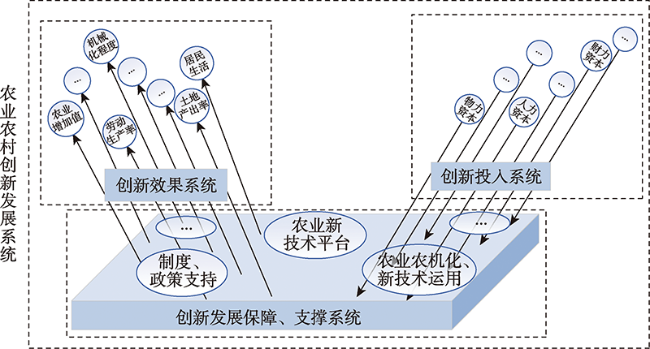
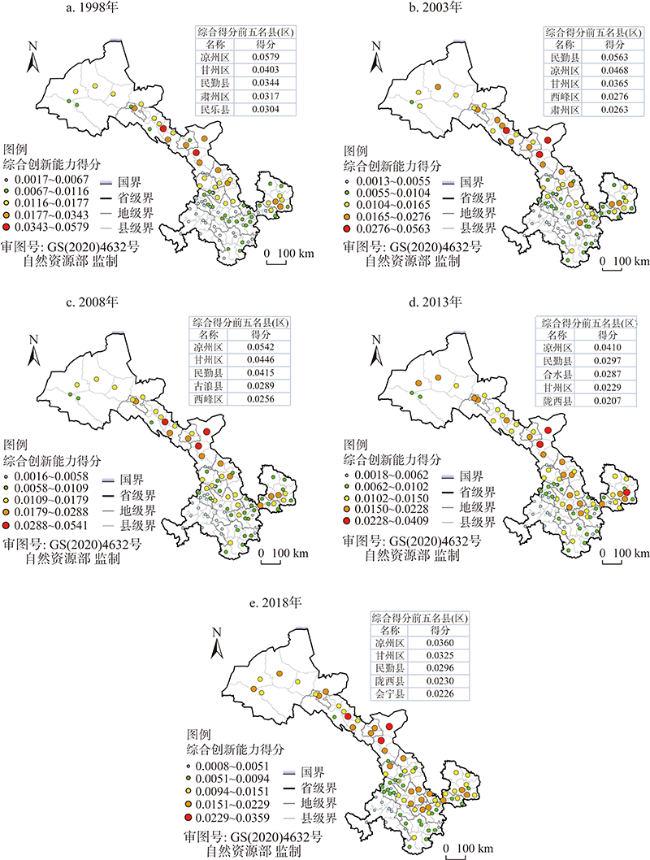
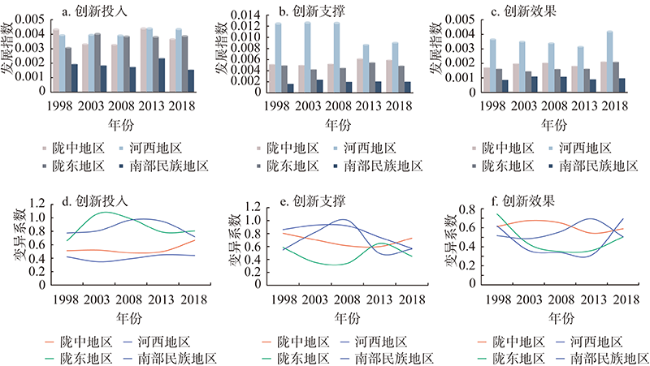
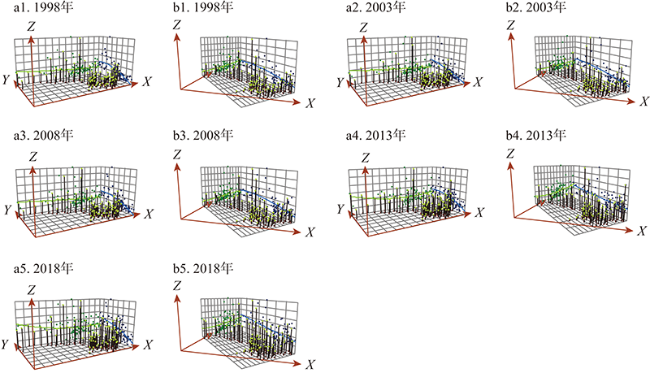
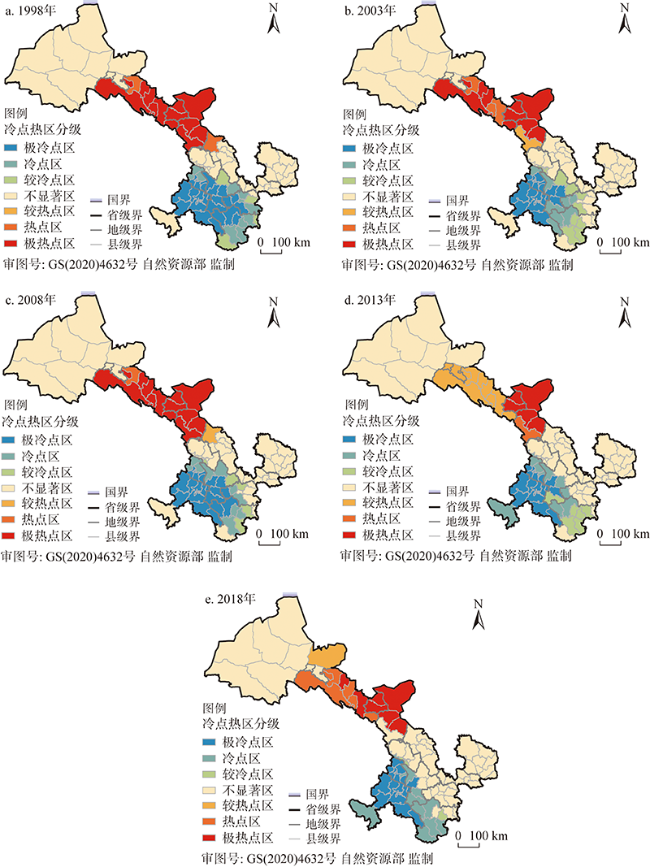
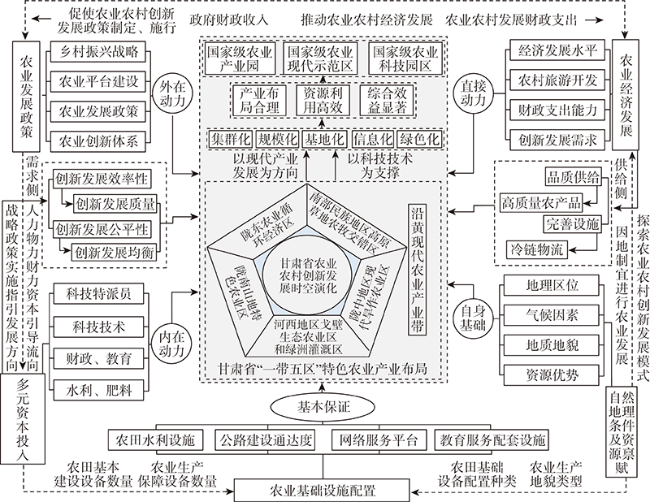
The implementation of agricultural and rural modernization and innovation-driven development will effectively promote the long-term rural revitalization strategy so as to form a new situation for the development of China's agriculture and rural areas. Based on 86 county-level units in Gansu province, this paper constructs an agricultural and rural innovation-driven development evaluation index system, including 28 secondary indexes from three dimensions of innovation input, innovation guarantee, and innovation effect, and comprehensively evaluates the level of innovation development in rural areas. The results show that: (1) The overall innovation score of agriculture and rural areas in the study area is on the rise, but the growth rate is relatively low. The counties and districts with higher scores on comprehensive innovation ability are mainly concentrated in the eastern Hexi region, and those with lower scores are mainly in the southern ethnic regions. The level of innovation guarantee and innovation effect in Hexi is at the forefront of the province, and the level of innovation input in the southern ethnic regions is relatively low. (2) In the east-west direction, the innovation level of agriculture and rural areas is high in the west and low in the east. After 2013, the pattern of "high at both ends and low in the middle" has gradually formed in terms of the innovation level; in the north-south direction, the innovation level is high in the north and low in the south; in the southeast-northwest direction, it is high in the northwest and low in the southeast; in the southwest-northeast direction, it is high in the northeast and low in the southwest. The direction of the innovation index has not changed significantly, and it has a certain degree of lock-in in space. (3) The hot spots of innovation are concentrated in cities of Zhangye, Wuwei and Jinchang in the Hexi region, while the cold spots are mainly in the southern ethnic regions; the number of extremely cold spots and hot spots has decreased, and the gap between county-level agricultural and rural innovation is narrowing. (4) Multiple capital investment, agricultural economic development, natural geographical conditions and resource endowments, agricultural infrastructure allocation, agricultural development policies and other factors act on the spatio-temporal evolution of agricultural and rural innovation in Gansu through internal and external factors combined with both supply and demand of innovation-driven development.
YIN Jun-feng , SHI Pei-ji , ZHANG Wei-ping , CAI Wen-shun , LI Xin-yang , LI Ya-li . The evaluation and spatial pattern of agricultural and rural innovation-driven development at county level in the context of rural revitalization:Take Gansu province as an example[J]. JOURNAL OF NATURAL RESOURCES, 2022 , 37(2) : 291 -306 . DOI: 10.31497/zrzyxb.20220202
表1 农业农村创新发展评价指标体系Table 1 Evaluation index system of agricultural and rural innovation-driven development |
| 目标层 | 一级指标 | 二级指标 |
|---|---|---|
| 农业 农村 创新 发展 指标 体系 (Z) | 创新投入 (Z1) 创新保障 (Z2) 创新效果 (Z3) | Z1-1万人乡村从业人员高中以上文化程度;Z1-2万人农村从业人员中科学研究和综合技术服务人数;Z1-3万人农村从业人员中信息传输计算机服务和软件业人数;Z1-4万人农村农机从业人员占农村人数比例;Z1-5农林渔牧业从业人数占农村总人口比例;Z1-6农村人均用电量;Z1-7单位耕地面积农业机械总动力 Z2-1农村旋耕机数;Z2-2农村机动脱粒机数;Z2-3机械铺地膜面积;Z2-4农田基本建设设备数;Z2-5有效灌溉面积占耕地灌溉面积比例;Z2-6机械深耕深松面积;Z2-7农作物播种面积;Z2-8机耕面积占总耕地面积;Z2-9机械深施化肥面积;Z2-10机播面积占农作物总播面积;Z2-11精少量播种面积;Z2-12农业科技园区;Z2-13农业产业园;Z2-14农业现代示范区① Z3-1农村居民人均纯收入增速;Z3-2农机经营效益—利润总额;Z3-3机收面积占总农作物总播面积;Z3-4人均农业增加值;Z3-5农业劳动生产率;Z3-6农村土地产出率;Z3-7粮食单产水平 |
① 对Z2-12、Z2-13、Z2-14分别以国家级、省级赋值为2分、1分。 |
| [1] |
刘彦随 . 中国乡村振兴规划的基础理论与方法论. 地理学报, 2020,75(6):1120-1133.
[
|
| [2] |
璩路路, 王永生, 刘彦随 , 等. 乡村振兴导向的水土资源承载力评价及其优化. 自然资源学报, 2021,36(2):300-314.
[
|
| [3] |
徐维祥, 李露, 周建平 , 等. 乡村振兴与新型城镇化耦合协调的动态演进及其驱动机制. 自然资源学报, 2020,35(9):2044-2062.
[
|
| [4] |
刘彦随, 冯巍仑, 李裕瑞 . 现代农业地理工程与农业高质量发展: 以黄土丘陵沟壑区为例. 地理学报, 2020,75(10):2029-2046.
[
|
| [5] |
李小建, 胡雪瑶, 史焱文 , 等. 乡村振兴下的聚落研究: 来自经济地理学视角. 地理科学进展, 2021,40(1):3-14.
[
|
| [6] |
董文静, 王昌森, 张震 . 山东省乡村振兴与乡村旅游时空耦合研究. 地理科学, 2020,40(4):628-636.
[
|
| [7] |
陈秧分, 刘玉, 李裕瑞 . 中国乡村振兴背景下的农业发展状态与产业兴旺途径. 地理研究, 2019,38(3):632-642.
[
|
| [8] |
刘彦随 . 中国新时代城乡融合与乡村振兴. 地理学报, 2018,73(4):637-650.
[
|
| [9] |
梁流涛, 曲福田, 冯淑怡 . 农村发展中生态环境问题及其管理创新探讨. 软科学, 2010,24(8):53-57.
[
|
| [10] |
|
| [11] |
|
| [12] |
|
| [13] |
|
| [14] |
JAVIER, ESPARCIA. Innovation and networks in rural areas. An analysis from European innovative projects. Journal of Rural Studies, 2014,34:1-14.
|
| [15] |
|
| [16] |
|
| [17] |
|
| [18] |
张莉侠, 俞美莲, 王晓华 . 农业科技创新效率测算及比较研究. 农业技术经济, 2016, ( 12):84-90.
[
|
| [19] |
张静, 张宝文 . 基于Malmquist指数法的我国农业科技创新效率实证分析. 科技进步与对策, 2011,28(7):84-88.
[
|
| [20] |
胡平波 . 支持合作社生态化建设的区域生态农业创新体系构建研究. 农业经济问题, 2018, ( 12):94-106.
[
|
| [21] |
李洪文, 黎东升 . 农业科技创新能力评价研究: 以湖北省为例. 农业技术经济, 2013, ( 10):114-119.
[
|
| [22] |
焦贝贝, 张治河, 刘海猛 , 等. 乡村振兴战略下欠发达地区农村创新能力评价: 以甘肃省86个县级行政单元为例. 经济地理, 2020,40(1):132-139, 172.
[
|
| [23] |
孙长东, 陈酉宜 . 新时期我国农业科技创新能力评价与提升对策研究. 中国农业资源与区划, 2020,41(6):91-99.
[
|
| [24] |
陈慧女, 周㑇. 中国农业科技创新模式变迁及策略选择. 科技进步与对策, 2014,31(17):70-74.
[
|
| [25] |
熊启泉, 邓家琼 . 现代农业发展中的财政农业投资模式创新. 华南农业大学学报: 社会科学版, 2008, ( 4):49-55.
[
|
| [26] |
李光明 . 农业循环经济发展模式创新及推广对策研究. 农村经济, 2009, ( 1):110-113.
[
|
| [27] |
赵黎 . 成功还是失败? 欧盟国家农业知识创新服务体系的演变及其启示. 中国农村经济, 2020, ( 7):122-144.
[
|
| [28] |
彭凌凤 . 农业科技推广模式的创新探索: 新农村发展研究院服务农业科技推广的模式比较. 农村经济, 2017, ( 2):104-109.
[
|
| [29] |
史焱文, 李二玲, 李小建 . 农业创新系统研究脉络及启示. 经济地理, 2014,34(3):10-16.
[
|
| [30] |
胡雪瑶, 张子龙, 陈兴鹏 , 等. 县域经济发展时空差异和影响因素的地理探测: 以甘肃省为例. 地理研究, 2019,38(4):772-783.
[
|
| [31] |
陈琼, 陈丽娜, 宋建辉 . 天津农村创新能力综合评价指标体系构建研究. 天津农业科学, 2015,21(4):41-45.
[
|
| [32] |
李雪铭, 郭玉洁, 田深圳 , 等. 辽宁省城市人居环境系统耦合协调度时空格局演变及驱动力研究. 地理科学, 2019,39(8):1208-1218.
[
|
| [33] |
刘海猛, 方创琳, 黄解军 , 等. 京津冀城市群大气污染的时空特征与影响因素解析. 地理学报, 2018,73(1):177-191.
[
|
| [34] |
刘汉初, 樊杰, 周侃 . 中国科技创新发展格局与类型划分: 基于投入规模和创新效率的分析. 地理研究, 2018,37(5):910-924.
[
|
| [35] |
王晓辰, 韩增林, 彭飞 , 等. 中国海洋科技创新效率发展格局演变与类型划分. 地理科学, 2020,40(6):890-899.
[
|
| [36] |
肖黎明, 张仙鹏 . 强可持续理念下绿色创新效率与生态福利绩效耦合协调的时空特征. 自然资源学报, 2019,34(2):312-324.
[
|
| [37] |
张林, 张雯卿 . 普惠金融与农村产业融合发展的耦合协同关系及动态演进. 财经理论与实践, 2021,42(2):2-11.
[
|
| [38] |
李二玲 . 中国农业产业集群演化过程及创新发展机制: 以“寿光模式”蔬菜产业集群为例. 地理科学, 2020,40(4):617-627.
[
|
| [39] |
赵婧, 王智颖 . 农村电子商务产业集聚发展演化路径探析. 湖北农业科学, 2017,56(21):4196-4198.
[
|
/
| 〈 |
|
〉 |