JOURNAL OF NATURAL RESOURCES >
The spatio-temporal structure of international transboundary water cooperation: Based on the changes of issue area and scale differentiation
Received date: 2020-01-08
Request revised date: 2020-03-03
Online published: 2021-09-28
Copyright
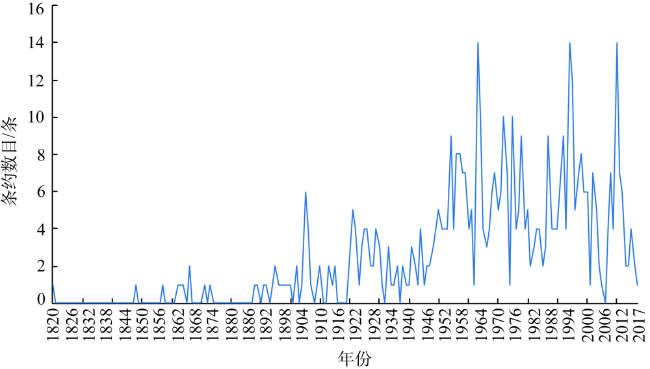
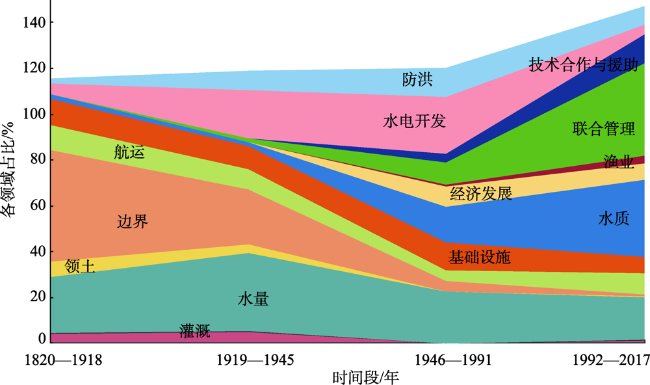
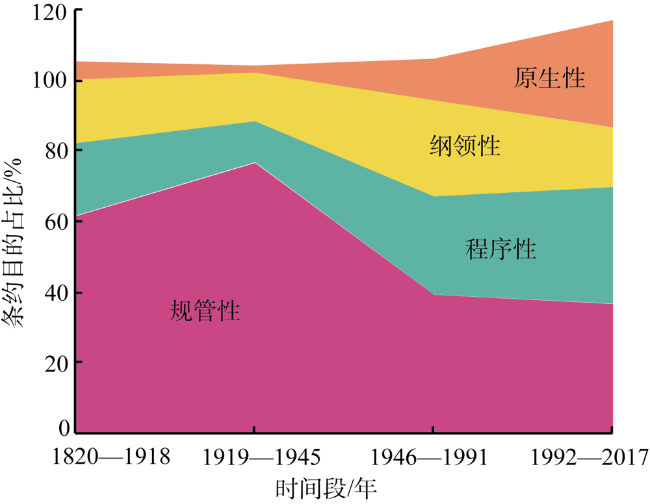
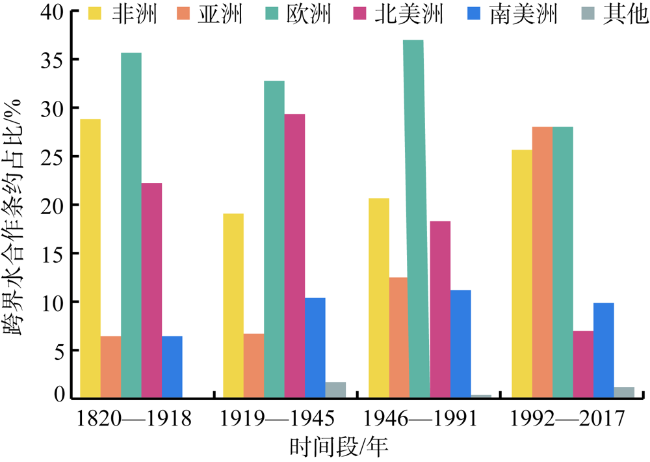
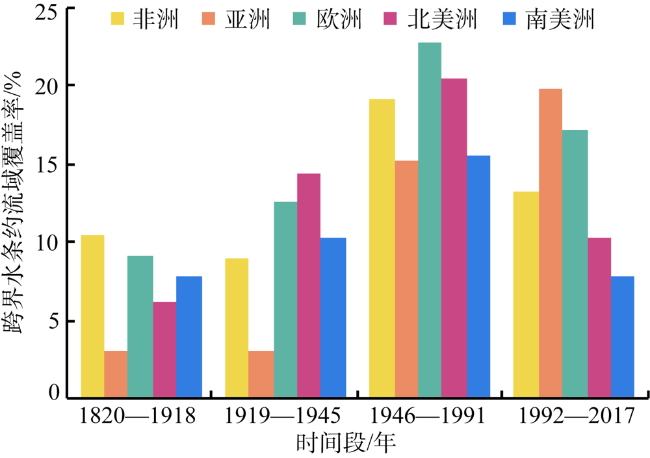
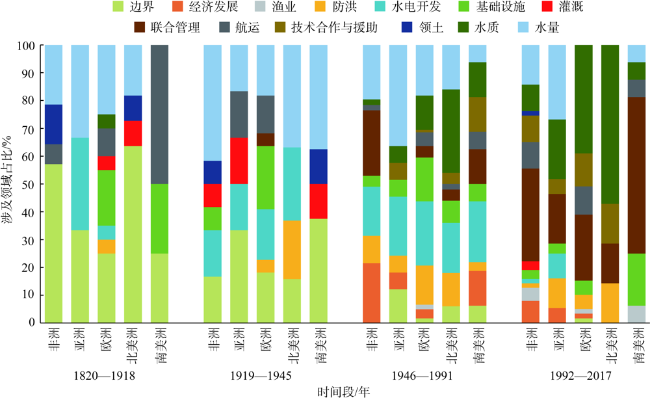
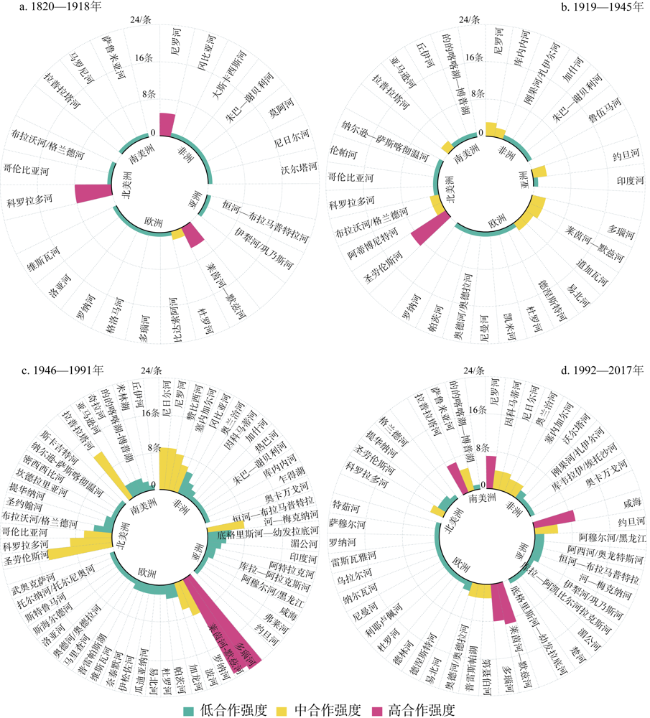
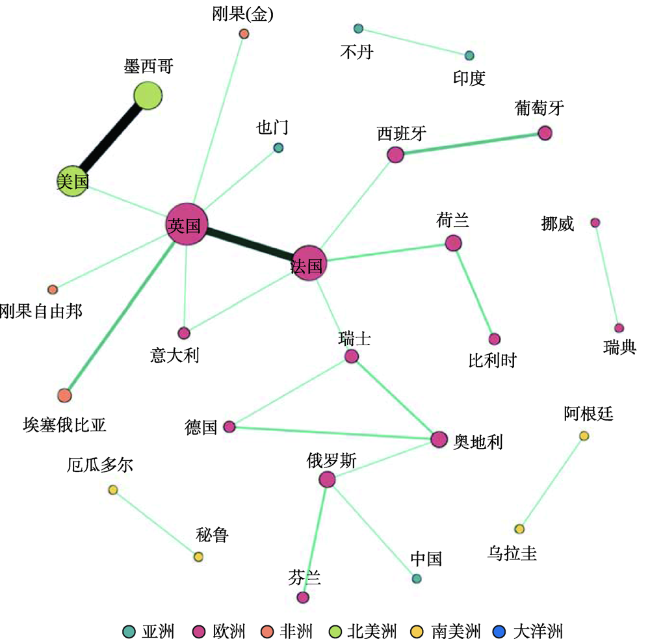
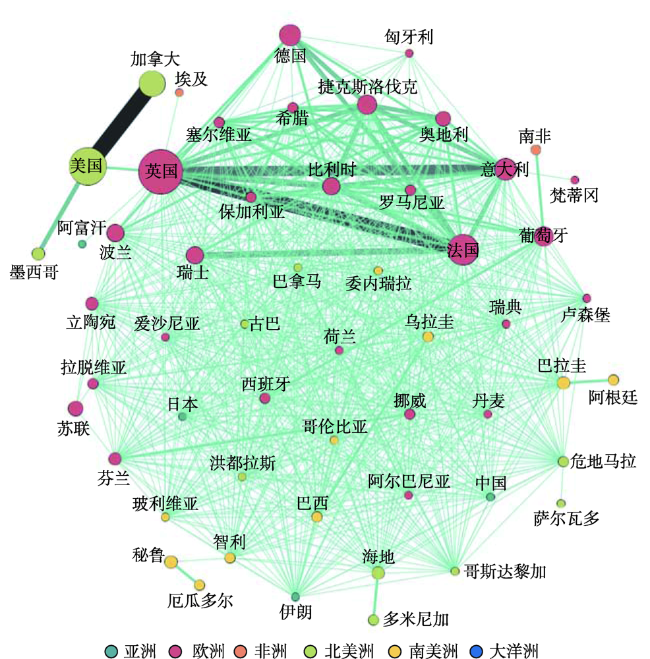
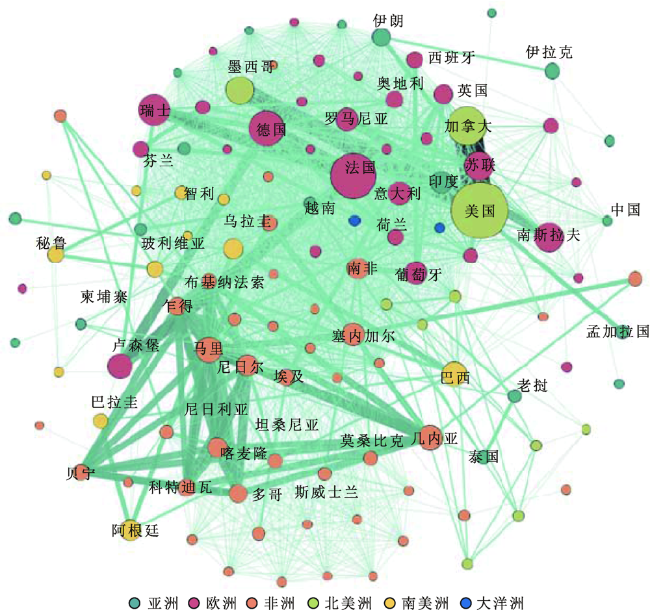
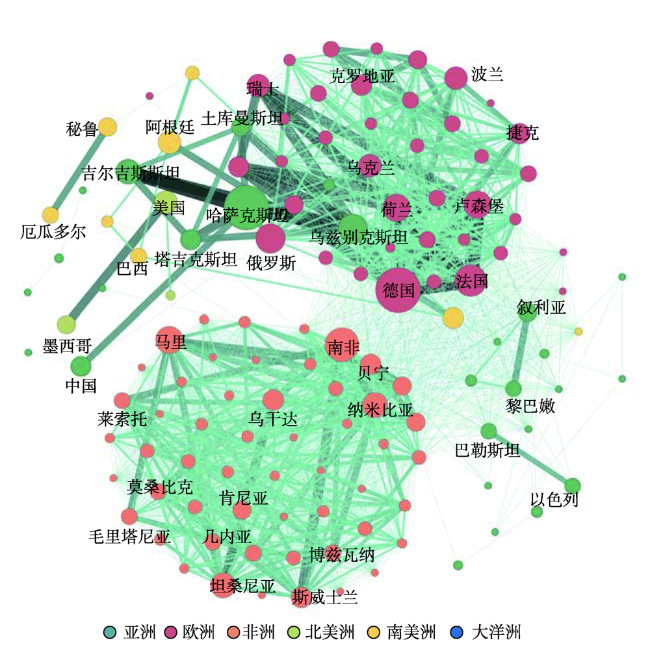
Since the international water crisis intensified, transboundary water cooperation has become the key to resolving the water crisis and achieving peaceful and sustainable development among countries. This study built international transboundary water cooperation networks based on transboundary water agreements, and used social network analysis and other methods to examine the spatial and temporal structure of transboundary water cooperation from the global, intercontinental and national scales. The conclusions are as follows: (1) The number of international transboundary water cooperation projects increased from 1820 to 2017, and the scope of cooperation expanded significantly. The cooperation issue area changed from border issues and water quantity to joint management and water quality. The purpose of the agreements changed from regulatory to generative, procedural and regulatory. Multilateral cooperation and transboundary groundwater cooperation are the current development trends in international transboundary water cooperation. (2) During the same period, there were differences in the development process and focus areas of transboundary water cooperation among the five continents. Europe and North America were dominated by water quality, Africa and South America were dominated by joint management, and Asia had similar cooperation proportions in three areas: water quality, water quantity and joint management. Although the global transboundary water cooperation network covers more and more basins and countries, its coverage rate is still low. (3) The international transboundary water cooperation networks from 1820 to 2017 experienced three stages, namely, network formation, network expansion, and network differentiation. North American countries have a high degree of transboundary water cooperation, but due to geographical constraints, their cooperation targets are relatively single. After World War II, African countries have gradually dominated in the network. Since 1992, Asian countries have been increasingly active in the transboundary water cooperation network. The demand for transboundary water cooperation in Asian countries is growing. China, as a large responsible developing country, should strengthen transboundary water cooperation with neighboring countries, and actively promote transboundary water cooperation in Asia.
ZHAI Chen-yang , DU De-bin , HOU Chun-guang , GUI Qin-chang , DUAN De-zhong . The spatio-temporal structure of international transboundary water cooperation: Based on the changes of issue area and scale differentiation[J]. JOURNAL OF NATURAL RESOURCES, 2021 , 36(7) : 1844 -1860 . DOI: 10.31497/zrzyxb.20210715
表1 1820—2017年全球跨界水合作统计Table 1 Statistics on international transboundary water cooperation from 1820 to 2017 |
| 指标 | 1820—1918年 (99年) | 1919—1945年 (27年) | 1946—1991年 (46年) | 1992—2017年 (26年) |
|---|---|---|---|---|
| 签订条约数/条 | 45 | 58 | 241 | 140 |
| 跨界水合作密度 | 0.19 | 0.88 | 2.14 | 2.20 |
| 双边条约占比/% | 98.78 | 91.38 | 79.25 | 59.29 |
| 涉及缔约国数目/个 | 27 | 55 | 117 | 130 |
| 涉及流域数/个 | 23 | 30 | 59 | 44 |
| 跨界地下水条约数/条 | 1 | 0 | 0 | 5 |
| 全球性或多流域条约数/条 | 0 | 1 | 5 | 10 |
注:跨界水合作密度为某一时期签订条约数占总条约数的比例除以该时期时间跨度占总时间跨度的比例。 |
表2 1820—2017年全球跨界水合作网络的特征量统计Table 2 Statistics on the characteristics of international transboundary water networks from 1820 to 2017 |
| 指标 | 1820—1918年 | 1919—1945年 | 1946—1991年 | 1992—2017年 |
|---|---|---|---|---|
| 节点数/个 | 27 | 55 | 117 | 130 |
| 网络密度 | 0.068 | 0.552 | 0.362 | 0.326 |
| 平均度 | 1.778 | 29.820 | 42.373 | 42.000 |
| 平均加权度 | 3.481 | 33.380 | 54.420 | 55.510 |
| 平均聚类系数 | 0.281 | 0.924 | 0.887 | 0.860 |
表3 1820—2017年全球跨界水合作网络节点特征统计Table 3 Statistics on the characteristics of nodes about international transboundary water networks from 1820 to 2017 |
| 时间段/年 | 参与条约数目 | 相对度中心性 | 加权度中心性 | |||||
|---|---|---|---|---|---|---|---|---|
| 国家 | 数值/条 | 国家 | 数值 | 国家 | 数值 | |||
| 1820—1918 | 英国 | 15 | 英国 | 0.269 | 英国 | 15 | ||
| 法国 | 12 | 法国 | 0.192 | 法国 | 12 | |||
| 美国 | 10 | 奥地利 | 0.115 | 美国 | 10 | |||
| 墨西哥 | 9 | 瑞士 | 0.115 | 墨西哥 | 9 | |||
| 奥地利 | 4 | 俄罗斯 | 0.115 | 奥地利 | 5 | |||
| 俄罗斯 | 4 | 西班牙 | 0.077 | 俄罗斯 | 4 | |||
| 西班牙 | 4 | 美国 | 0.077 | 西班牙 | 4 | |||
| 荷兰 | 4 | 德国 | 0.077 | 荷兰 | 4 | |||
| 瑞士 | 3 | 荷兰 | 0.077 | 瑞士 | 4 | |||
| 葡萄牙(埃塞俄比亚) | 3 | 意大利 | 0.077 | 葡萄牙(埃塞俄比亚、德国) | 3 | |||
| 1919—1945 | 英国 | 17 | 英国 | 0.815 | 英国 | 69 | ||
| 美国 | 14 | 意大利 | 0.778 | 法国 | 64 | |||
| 法国 | 11 | 奥地利 | 0.759 | 意大利 | 59 | |||
| 加拿大 | 9 | 捷克斯洛伐克 | 0.759 | 捷克斯洛伐克 | 58 | |||
| 意大利 | 7 | 波兰 | 0.759 | 比利时 | 57 | |||
| 德国 | 7 | 立陶宛 | 0.759 | 奥地利 | 52 | |||
| 捷克斯洛伐克 | 6 | 法国 | 0.759 | 保加利亚 | 50 | |||
| 葡萄牙 | 6 | 比利时 | 0.759 | 希腊 | 50 | |||
| 比利时 | 5 | 保加利亚 | 0.759 | 罗马尼亚 | 50 | |||
| 瑞士(波兰) | 5 | 希腊 | 0.759 | 塞尔维亚 | 50 | |||
| 1946—1991 | 美国 | 43 | 塞内加尔 | 0.698 | 马里 | 160 | ||
| 法国 | 33 | 马里 | 0.698 | 尼日尔 | 149 | |||
| 喀麦隆 | 27 | 尼日尔 | 0.698 | 法国 | 133 | |||
| 德国 | 24 | 乌干达 | 0.690 | 美国 | 123 | |||
| 瑞士 | 21 | 埃及 | 0.681 | 乍得 | 121 | |||
| 苏联 | 19 | 阿尔及利亚 | 0.681 | 布吉纳法索 | 118 | |||
| 南斯拉夫 | 19 | 加纳 | 0.681 | 塞内加尔 | 111 | |||
| 墨西哥 | 18 | 肯尼亚 | 0.681 | 加拿大 | 107 | |||
| 马里 | 16 | 摩洛哥 | 0.681 | 德国 | 105 | |||
| 巴西(几内亚、卢森堡) | 15 | 突尼斯 | 0.681 | 苏联 | 103 | |||
| 1992—2017 | 德国 | 18 | 摩洛哥 | 0.612 | 德国 | 143 | ||
| 哈萨克斯坦 | 18 | 南非 | 0.605 | 南非 | 123 | |||
| 南非 | 13 | 贝宁 | 0.605 | 纳米比亚 | 119 | |||
| 法国 | 12 | 尼日尔 | 0.605 | 贝宁 | 113 | |||
| 乌兹别克斯坦 | 11 | 纳米比亚 | 0.605 | 法国 | 113 | |||
| 俄罗斯 | 11 | 利比亚 | 0.605 | 布吉纳法索 | 112 | |||
| 荷兰 | 10 | 布吉纳法索 | 0.605 | 荷兰 | 110 | |||
| 卢森堡 | 10 | 科特迪瓦 | 0.605 | 卢森堡 | 110 | |||
| 马里 | 10 | 尼日利亚 | 0.605 | 科特迪瓦 | 106 | |||
| 纳米比亚(坦桑尼亚、吉尔吉斯斯坦) | 9 | 几内亚比绍(突尼斯) | 0.605 | 尼日尔 | 104 | |||
注:括号内表示与括号前的国家指标数值相等的国家。 |
| [1] |
|
| [2] |
杨艳昭, 封志明, 孙通, 等. “一带一路”沿线国家水资源禀赋及开发利用分析. 自然资源学报, 2019, 34(6):1146-1156.
[
|
| [3] |
|
| [4] |
王志芳. 中国建设“一带一路”面临的气候安全风险. 国际政治研究, 2015, 36(4):56-72, 6.
[
|
| [5] |
|
| [6] |
彭珂珊. 21世纪中国水资源危机. 水利水电科技进展, 2000,(5):13-16,68-69.
[
|
| [7] |
|
| [8] |
水利部国际经济技术合作交流中心. 跨界水合作与发展. 北京: 社会科学文献出版社, 2018.
[International Economic & Technical Cooperation and Exchange Center, Ministry of Water Resources, P.R. China. Transboundary Water Cooperation and Development. Beijing: Social Sciences Academic Press, 2018.]
|
| [9] |
|
| [10] |
何大明, 刘昌明, 冯彦, 等. 中国国际河流研究进展及展望. 地理学报, 2014, 69(9):1284-1294.
[
|
| [11] |
李昕蕾, 华冉. 国际流域水安全复合体中的安全秩序建构: 基于澜沧江—湄公河流域水冲突—合作事件的分析. 社会科学, 2019,(13):17-35.
[
|
| [12] |
|
| [13] |
|
| [14] |
|
| [15] |
|
| [16] |
刘艳丽, 赵志轩, 孙周亮, 等. 基于水利益共享的跨境流域水资源多目标分配研究: 以澜沧江—湄公河为例. 地理科学, 2019, 39(3):387-393.
[
|
| [17] |
|
| [18] |
|
| [19] |
|
| [20] |
|
| [21] |
田向荣, 王国义, 樊彦芳. 咸海流域跨界水合作历史、形势及思考. 边界与海洋研究, 2017, 2(6):90-104.
[
|
| [22] |
|
| [23] |
|
| [24] |
何大明, 刘昌明, 杨志峰. 中国国际河流可持续发展研究. 地理学报, 1999, 54(s1):1-10.
[
|
| [25] |
任俊霖, 彭梓倩, 孙博文, 等. 澜湄水资源合作机制. 自然资源学报, 2019, 34(2):250-260.
[
|
| [26] |
李昕蕾. 冲突抑或合作: 跨国河流水治理的路径和机制. 外交评论: 外交学院学报, 2016, 33(1):126-152.
[
|
| [27] |
|
| [28] |
|
| [29] |
胡文俊, 简迎辉, 杨建基, 等. 国际河流管理合作模式的分类及演进规律探讨. 自然资源学报, 2013, 28(12):2034-2043.
[
|
| [30] |
|
| [31] |
|
| [32] |
李志斐. 美国的全球水外交战略探析. 国际政治研究, 2018, 39(3):63-88,4-5.
[
|
| [33] |
张励. 水外交: 中国与湄公河国家跨界水合作及战略布局. 国际关系研究, 2014,(4):25-36,152-153.
[
|
| [34] |
刘军. 整体网分析讲义(第二版):UCINET 软件实用指南. 上海: 格致出版社, 2014.
[
|
| [35] |
|
| [36] |
周秋文, 杨胜天, 蔡明勇, 等. 基于事件数据的雅鲁藏布江—布拉马普特拉河国际河流安全分析. 世界地理研究, 2013, 22(4):127-133.
[
|
/
| 〈 |
|
〉 |