JOURNAL OF NATURAL RESOURCES >
An analysis on moisture source of extreme precipitation in Southwest China in summer
Received date: 2020-05-06
Revised date: 2020-08-13
Online published: 2021-07-28
Copyright
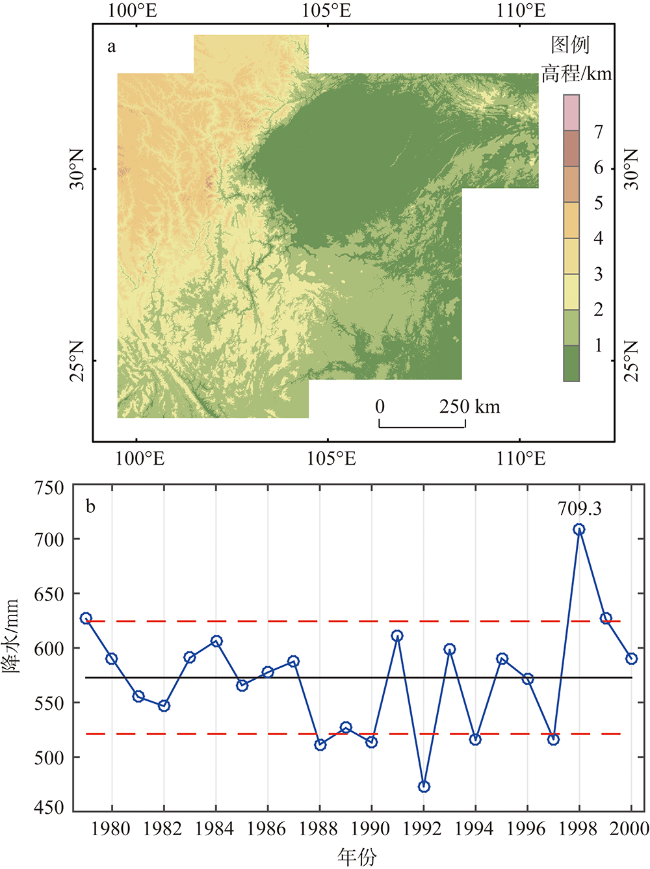
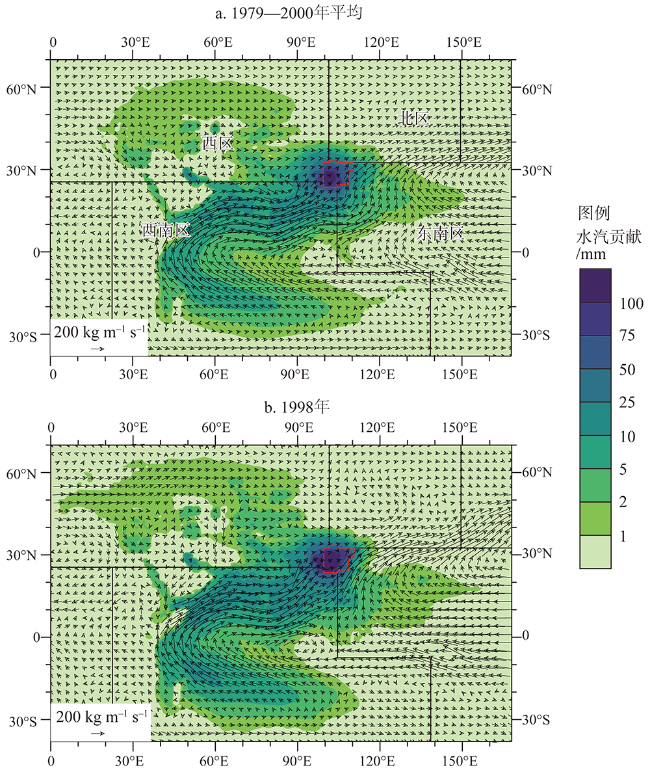
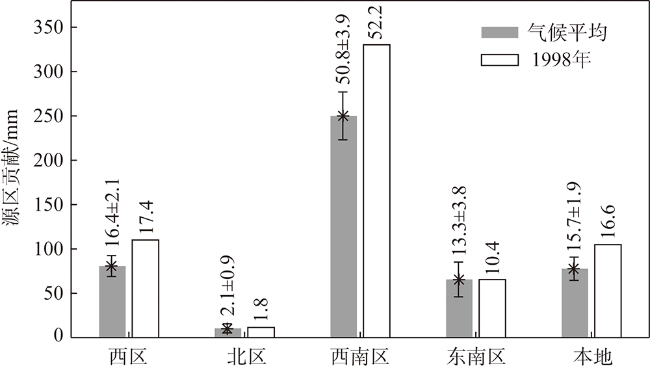
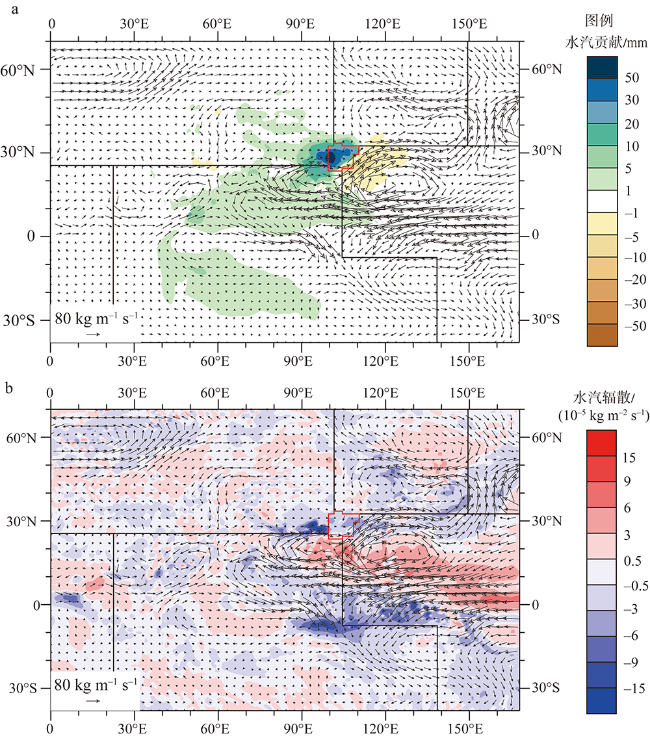
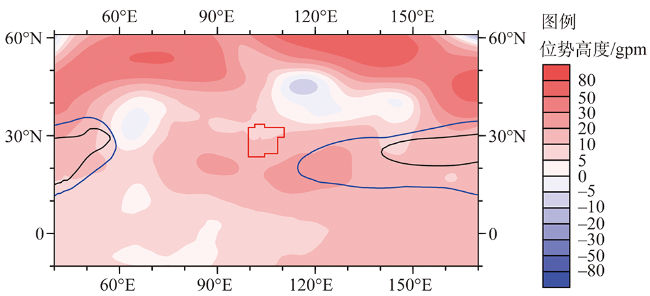
The terrain in Southwest China (SWC) is very complicated, and it is prone to floods and relative geological disasters due to heavy rain. In summer 1998, the SWC precipitation reached a maximum of 709.3 mm, which is around 23.9% above the climate mean. By using a Eulerian model of moisture recycling WAM2layers and big data such as ERA-Interim reanalysis, the precipitation moisture in summer SWC was backtracked. It is found that there are four major source regions for SWC, which are the southwest monsoon region, the westerlies region, the local region, and the southeast monsoon region. They contributed around 330.1 mm, 110.0 mm, 104.8 mm, and 65.6 mm in water depth of SWC in summer 1998, which accounted for 52.2%, 17.4%, 16.6%, and 10.4% of the tracked precipitation moisture, respectively. The southwest monsoon region, from the west Indochina Peninsula to the Indian subcontinent to the Indian Ocean, as the largest moisture source, contributed more than half the precipitation moisture. The extra moisture of the extreme precipitation during summer 1998 came mainly from the southwest monsoon region, the westerlies region, and the local region, contributing about 80.1 mm, 29.3 mm, and 27.1 mm, respectively, above the average moisture contribution, which together accounted for 99.9% of the extra precipitation. The southwest monsoon region dominated the extra moisture contribution once again. Further analyses revealed that the Western Pacific subtropical high (WPSH) stretched to the southwest, forming two anomalous highs in the Northern Bay of Bengal and the South China Sea. This change made moisture transport by the southwest monsoon to SWC extremely strong, which resulted in extreme precipitation in SWC.
ZHANG Chi , WU Shao-hong . An analysis on moisture source of extreme precipitation in Southwest China in summer[J]. JOURNAL OF NATURAL RESOURCES, 2021 , 36(5) : 1186 -1194 . DOI: 10.31497/zrzyxb.20210508
| [1] |
柳媛普, 王素萍, 王劲松, 等. 气候变暖背景下西南地区干旱灾害风险评估. 自然资源学报, 2018,33(2):325-336.
[
|
| [2] |
贺敏, 宋立生, 王展鹏, 等. 基于多源数据的干旱监测指数对比研究: 以西南地区为例. 自然资源学报, 2018,33(7):1257-1269.
[
|
| [3] |
|
| [4] |
史培军, 吕丽莉, 汪明, 等 . 灾害系统: 灾害群、灾害链、灾害遭遇. 自然灾害学报, 2014,23(6):1-12.
[
|
| [5] |
|
| [6] |
|
| [7] |
|
| [8] |
|
| [9] |
|
| [10] |
|
| [11] |
|
| [12] |
|
| [13] |
|
| [14] |
|
| [15] |
|
| [16] |
赵煜飞, 朱江, 许艳. 近50 a中国降水格点数据集的建立及质量评估. 气象科学, 2014,34(4):414-420.
[
|
| [17] |
|
| [18] |
|
| [19] |
|
| [20] |
|
| [21] |
|
| [22] |
|
| [23] |
|
/
| 〈 |
|
〉 |