JOURNAL OF NATURAL RESOURCES >
Spatio-temporal evolution of regional structure about crops and livestock in China based on the theory of comparative advantage
Received date: 2020-05-06
Revised date: 2020-08-14
Online published: 2021-07-28
Copyright
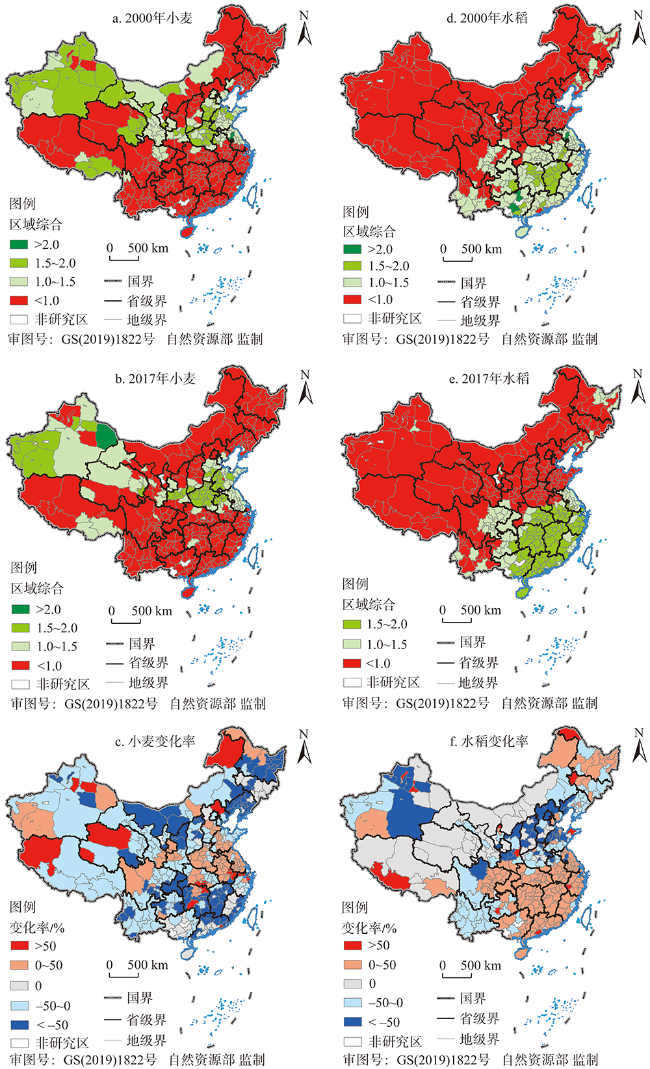
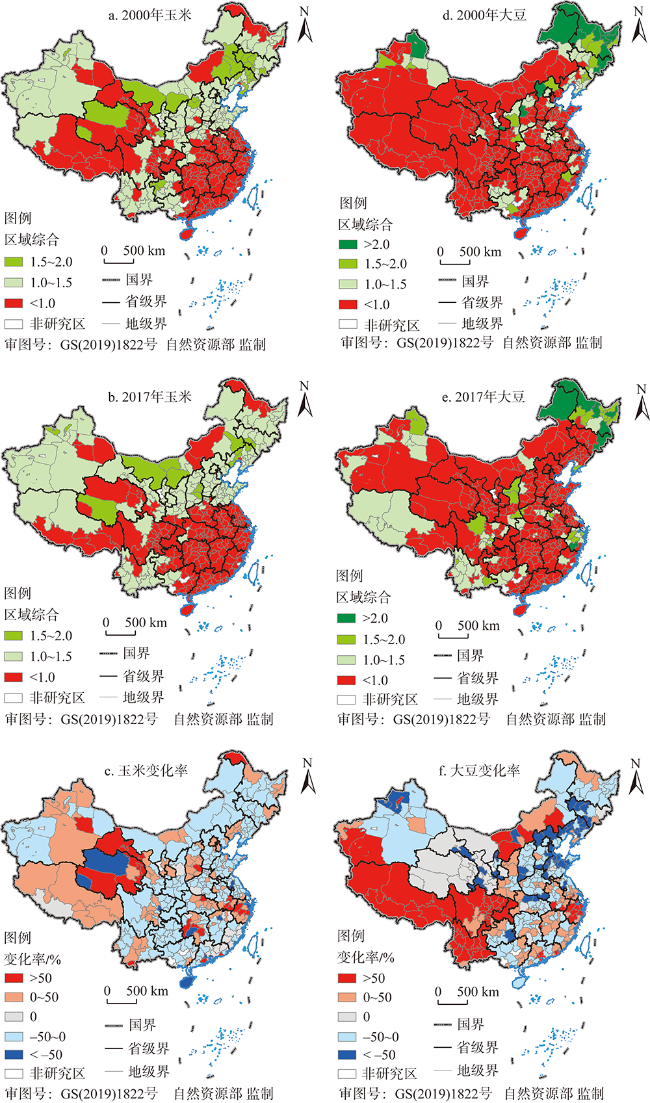
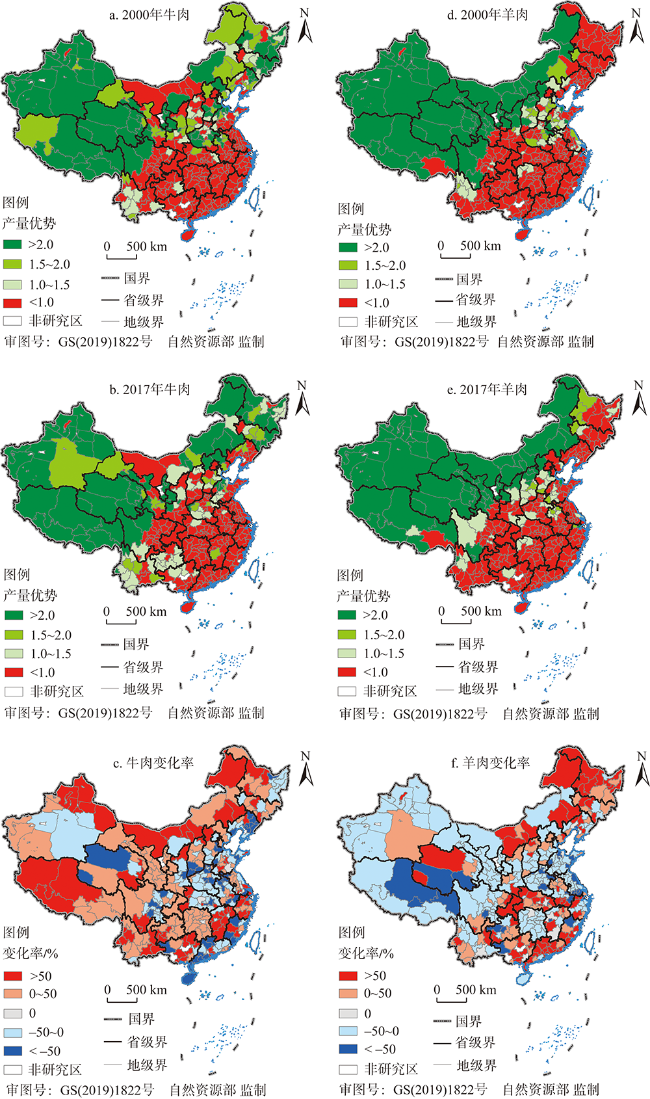
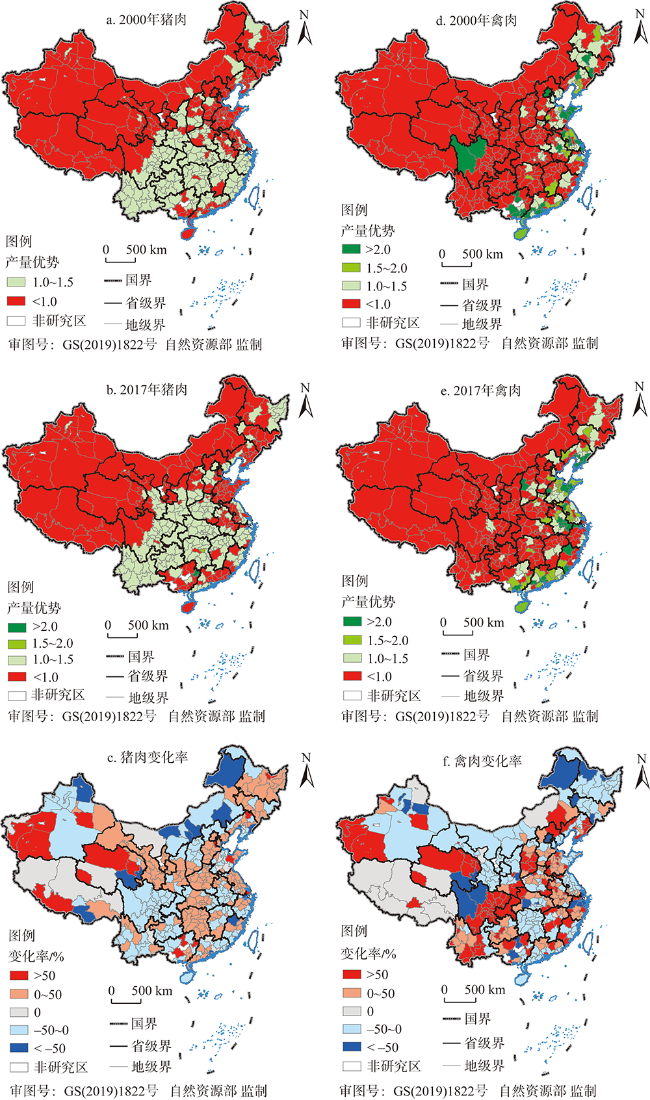
Studying the production pattern and evolution trend of crop and livestock is an important basis for optimizing crop-livestock structure to realize food security. Based on the production data sets of 335 cities in 2000 and 2017, this paper used the theory of comparative advantage to analyze the spatio-temporal evolution of the regional comparative advantages of major crops and livestock products in China. The results showed that: (1) In the past 17 years, there was no significant change in the spatial pattern of regional comparative advantages about crops and livestock products. The regions, which had the comparative advantage of meat, had been spreading. (2) The comparative advantage regions for the feed production (corn and soybeans) did not match the comparative advantage regions for livestock (pigs and poultry), where concentrated feed was mainly consumed. To improve the level of integrated crop-livestock in China, the following suggestions are put forward: rationally adjusting the regional crop-livestock structure; controling the scale of the livestock according to the scale of the regional crops; rationally allocating the distribution of manure fertilizer factories in the spatial pattern; advancing the progress of the technology so as to apply more manure fertilizer and less chemical fertilizer to crops; and strengthening the supervision of manure treatment of livestock factories.
Key words: crops; livestocks; comparative advantage; cities; spatio-temporal pattern
LI Yang , SUN Zhi-gang , LIU En-yuan , SHAO Chang-xiu . Spatio-temporal evolution of regional structure about crops and livestock in China based on the theory of comparative advantage[J]. JOURNAL OF NATURAL RESOURCES, 2021 , 36(5) : 1149 -1162 . DOI: 10.31497/zrzyxb.20210505
| [1] |
李鹏, 谭向勇, 王玉斌. 从食物保障状况看中国当前粮食安全. 中国农村经济, 2005, ( 6):4-10.
[
|
| [2] |
姚成胜, 滕毅, 黄琳. 中国粮食安全评价指标体系构建及实证分析. 农业工程学报, 2015,31(4):1-10.
[
|
| [3] |
胡小平, 星焱. 新形势下中国粮食安全的战略选择: "中国粮食安全形势与对策研讨会"综述. 中国农村经济, 2012, ( 1):92-96.
[
|
| [4] |
中国农业部. 农业部关于进一步调整优化农业结构的指导意见. 农村牧区机械化, 2015, ( 2):9-13.
[ The Ministry of Agriculture. Guiding opinions of the Ministry of Agriculture on further adjustment and optimization of agricultural structure. Mechanization of Rural Livestock Areas, 2015, ( 2):9-13.]
|
| [5] |
中国农业部. 全国农业可持续发展规划(2015—2030年). 农村实用技术, 2016, ( 4):5-15.
[ The Ministry of Agriculture. National agricultural sustainable development plan (2015-2030). Applicable Technologies for Rural Areas, 2016, ( 4):5-15.]
|
| [6] |
唐华俊, 罗其友. 基于比较优势的种植业区域结构调整. 中国农业资源与区划, 2001,22(5):37-41.
[
|
| [7] |
刘珍环, 唐鹏钦, 范玲玲, 等. 1980—2010年东北地区种植结构时空变化特征. 中国农业科学, 2016,49(21):4107-4119.
[
|
| [8] |
雷金银, 吴霞, 王长军, 等. 1980—2015年宁夏农作物种植结构时空变化特征分析. 干旱区资源与环境, 2017,31(12):172-178.
[
|
| [9] |
张绪美, 董元华, 王辉, 等. 中国畜禽养殖结构及其粪便N污染负荷特征分析. 环境科学, 2007,28(6):1311-1318.
[
|
| [10] |
孙会敏, 张越杰. 基于比较优势的吉林省畜牧业供给侧改革研究. 中国畜牧杂志, 2017,53(3):136-140.
[
|
| [11] |
马丽荣, 张邦林, 赵有彪. 基于比较优势理论的甘肃省主要畜产品生产区域结构研究. 中国农业资源与区划, 2019,40(11):230-236.
[
|
| [12] |
胡浩, 张锋. 中国肉鸡业区域比较优势分析. 湖南农业大学学报: 社会科学版, 2010,11(1):1-5, 33.
[
|
| [13] |
胡浩, 张锋, 黄延珺, 等. 中国猪肉生产的区域性布局及发展趋势分析. 中国畜牧杂志, 2009,45(20):43-47.
[
|
| [14] |
刘书通, 李春生, 方福平, 等. 我国水稻生产区域变化及其比较优势分析. 中国稻米, 2014,20(4):9-13.
[
|
| [15] |
司智陟. 我国牛肉生产区域比较优势分析. 中国畜牧杂志, 2011,47(18):19-21.
[
|
| [16] |
檀竹平, 高雪萍. 1997—2016年中国小麦种植区域比较优势及空间分布. 河南农业大学学报, 2018,52(5):825-838.
[
|
| [17] |
王士权, 王文义, 常倩, 等. 中国肉羊主产区比较优势分析. 中国畜牧杂志, 2015,51(22):3-9.
[
|
| [18] |
杨丹, 朱满德. 我国大豆生产格局与区域比较优势演变探析. 国土与自然资源研究, 2020, ( 1):58-64.
[
|
| [19] |
赵芳. 中国玉米生产比较优势分析. 财经问题研究, 2010, ( 8):48-51.
[
|
| [20] |
胡艳君, 乔娟. 比较优势与山西省种植业结构调整. 中国农业资源与区划, 2004,25(3):20-25.
[
|
| [21] |
李瑾, 秦向阳. 基于比较优势理论的我国畜牧业区域结构调控研究. 农业现代化研究, 2009,30(1):6-10.
[
|
| [22] |
蔡运龙, 陆大道, 周一星, 等. 地理科学的中国进展与国际趋势. 地理学报, 2004,59(6):803-810.
[
|
| [23] |
张娜. 生态学中的尺度问题: 内涵与分析方法. 生态学报, 2006,26(7):2340-2355.
[
|
| [24] |
陈培阳, 朱喜钢. 基于不同尺度的中国区域经济差异. 地理学报, 2012,67(8):1085-1097.
[
|
| [25] |
李祎君, 王春乙. 气候变化对我国农作物种植结构的影响. 气候变化研究进展, 2010,6(2):123-129.
[
|
| [26] |
于贵瑞, 谢高地, 于振良, 等. 我国区域尺度生态系统管理中的几个重要生态学命题. 应用生态学报, 2002,13(7):885-891.
[
|
| [27] |
朱红根. 气候变化对中国南方水稻影响的经济分析及其适应策略. 南京: 南京农业大学, 2010.
[
|
| [28] |
程叶青, 何秀丽. 东北地区粮食生产的结构变动及比较优势分析. 干旱地区农业研究, 2005,23(3):1-7.
[
|
| [29] |
杨鑫, 穆月英. 灌溉水压力, 供给弹性与粮食生产结构: 基于变系数 Nerlove模型. 自然资源学报, 2020,35(3):728-742.
[
|
| [30] |
胡忆雨, 朱颖璇, 杨雨豪, 等. 1951—2015年中国主要粮食与油料作物种植结构变化分析. 中国农业大学学报, 2019,24(11):183-196.
[
|
| [31] |
贾茂辉, 王桂霞. 中国肉牛主产区空间布局变迁的实证分析. 吉林农业, 2012, ( 3):27-28.
[
|
| [32] |
谭莹, 张俊艳, 何勤英. 中国生猪生产布局演进历程及区域优化研究. 黑龙江畜牧兽医, 2018, ( 6):6-10.
[
|
| [33] |
|
| [34] |
李洋, 孙志刚, 张旭博, 等. 种养系统可持续发展指数的空间格局及其演变趋势: 以山东省为例. 应用生态学报, 2019,30(7):2371-2383.
[
|
| [35] |
|
| [36] |
|
| [37] |
|
| [38] |
|
| [39] |
|
| [40] |
|
| [41] |
|
| [42] |
孟祥海, 周海川, 周海文. 区域种养平衡估算与养殖场种养结合意愿影响因素分析: 基于江苏省的实证研究. 生态与农村环境学报, 2018,34(2):132-139.
[
|
| [43] |
|
| [44] |
邱乐丰, 龙文莉, 方豪, 等. 基于种养平衡的杭州市畜禽养殖环境承载力研究. 自然资源学报, 2016,31(8):1410-1419.
[
|
| [45] |
徐敏云, 贺金生. 草地载畜量研究进展: 概念、理论和模型. 草业学报, 2014,23(3):313-324.
[
|
| [46] |
辛良杰, 王立新, 刘爱民. 我国饲料粮区域产消平衡特征及政策启示. 自然资源学报, 2018,33(6):965-977.
[
|
| [47] |
农业部. 我国畜禽粪便养分还田率低于50%. 中国猪业, 2015,10(11):78.
[
|
| [48] |
刘晓永, 李书田. 中国畜禽粪尿养分资源及其还田的时空分布特征. 农业工程学报, 2018,34(4):1-14, 316.
[
|
| [49] |
武兰芳, 欧阳竹, 谢小立. 不同种养结合区农田系统氮磷平衡分析. 自然资源学报, 2011,26(6):943-954.
[
|
| [50] |
|
/
| 〈 |
|
〉 |