中国居民膳食结构升级、国际贸易与粮食安全
|
辛良杰(1978- ),男,山东潍坊人,博士,副研究员,主要从事土地利用变化与效应研究。E-mail: xinlj@igsnrr.ac.cn |
收稿日期: 2020-09-14
要求修回日期: 2020-12-15
网络出版日期: 2021-08-28
基金资助
国家重点研发计划(2017YFE0104600)
版权
Dietary structure upgrade of China's residents, international trade and food security
Received date: 2020-09-14
Request revised date: 2020-12-15
Online published: 2021-08-28
Copyright
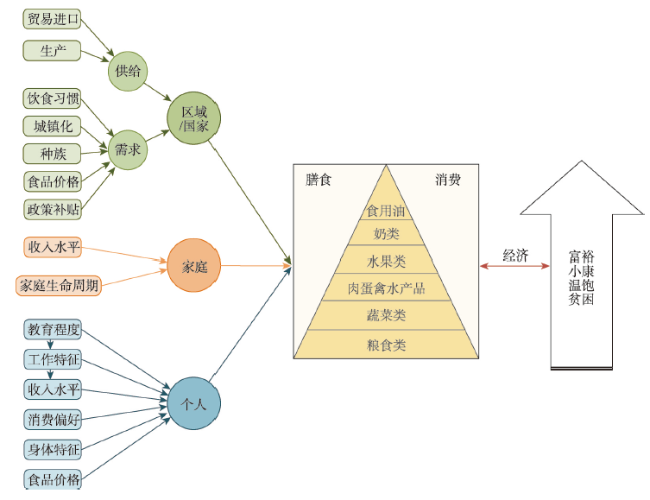
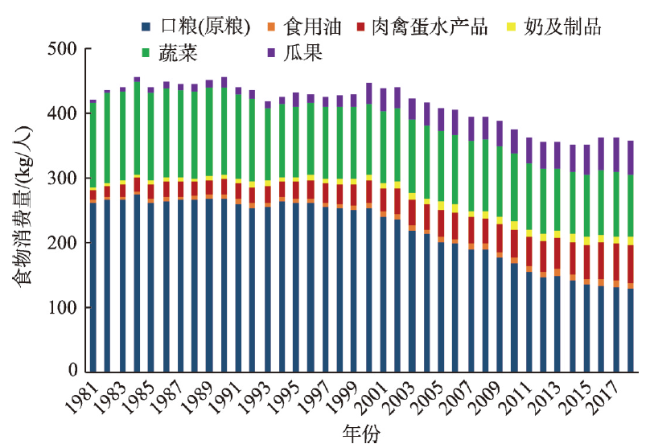
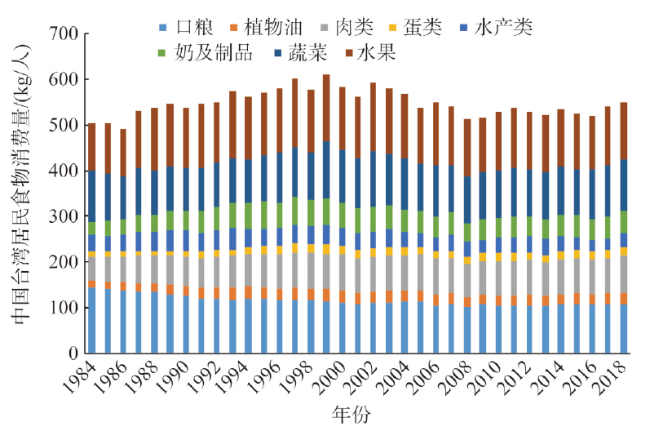
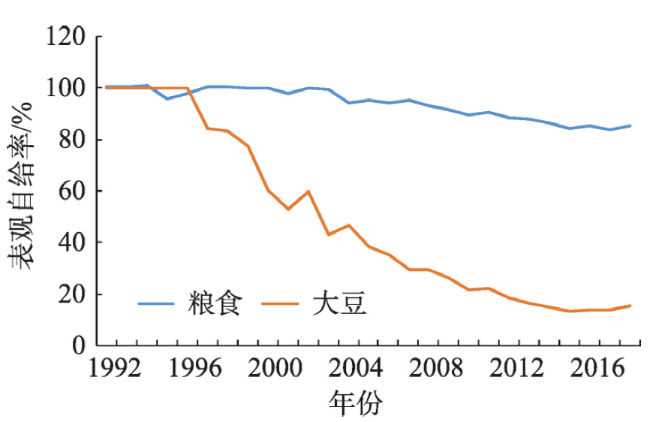
目前,中国居民膳食消费水平与结构正在由温饱型向全面小康型转变,形式上表现为由“粮菜型”向“粮肉菜果”多元型和由传统家庭烹饪型向现代便捷型转变。膳食消费结构和水平的改变将影响未来中国的粮食消费量。以中国台湾居民的膳食消费发展规律判断,目前中国大陆居民的膳食消费水平距离富裕水平下的稳定状态整体差距超过50%,肉禽类差距超过一倍。而2018年中国粮食表观自给率已经下降到了85%,大豆自给率仅为15%,虚拟耕地自给率仅为72.6%。在食物消费达到富裕稳定态时,中国不仅需要进口大量的蛋白饲料,还可能需要进口相当数量的能量饲料。基本结论为:仅仅依靠中国本土的农业生产资源已难以维持全面小康水平下的本土农产品需求,发展到富裕水平短缺将会更甚,依赖国际市场是必然需求。从维护生态环境的角度讲,在农产品进口贸易上可多考虑进口动物性产品,适当放开粮食类产品进口数量,自己生产水果、蔬菜等类的农产品。
辛良杰 . 中国居民膳食结构升级、国际贸易与粮食安全[J]. 自然资源学报, 2021 , 36(6) : 1469 -1480 . DOI: 10.31497/zrzyxb.20210609
At present, Chinese residents' dietary consumption structure is upgrading, changing from a subsistence type to a comprehensive well-off type and from traditional home cooking to modern convenience. Changes in the structure and level of dietary consumption will affect China's future food consumption. Judged from the development law of food consumption of residents in Taiwan, China, the overall gap between the current level and the stable state under the affluent level of Chinese residents' dietary consumption is about 53%, and the gap of animal food consumption is more than doubles. In the past, Chinese residents mainly used grains and vegetables as their main food. Now, they increase consumption of high value-added foods such as animal foods and fruits. China's nominal self-sufficiency rate of grain dropped to 85% in 2018, and that of soybean dropped to 15% at the same time. The self-sufficiency rate of virtual farmland was only 72.6%. Then, China needs to import not only a large amount of protein feed, but also a considerable amount of energy feed. It is concluded that it is difficult to maintain the demand for agricultural products only relying on China's local agricultural production resources. China should rely on domestic production and the international market to ensure food security. To protect the ecological environment, China should import more animal products, especially beef and lamb, appropriately liberalize the import volume of food products, self-produced fruits, and vegetables.
图3 中国台湾居民人均主要食物消费量注:数据来源于中国台湾农委会(http://statview.coa.gov.tw),口粮包括大米与面粉,分别按照0.73与0.85系数折算成原粮。 Fig. 3 Food consumption of residents in Taiwan, China |
表1 中国大陆居民膳食消费现状与中国台湾、日本和韩国的对比Table 1 Dietary consumption of residents in the Chinese mainland, Chinese Taiwan, Japan, and South Korea (kg/人) |
| 指标 | 中国大陆 | 中国台湾 | 日本 | 韩国 |
|---|---|---|---|---|
| 粮食(原粮) | 127.2 | 107.2 | 111.8 | 164.6 |
| 食用油 | 9.6 | 22.5 | 15.6 | 18.6 |
| 蔬菜及食用菌 | 96.1 | 112.6 | 91.1 | 197.1 |
| 肉禽类 | 38.5 | 83.5 | 49.3 | 70.7 |
| 水产品 | 11.4 | 29.4 | 30.7 | 35.2 |
| 蛋类 | 9.7 | 18.1 | 19.6 | 10.3 |
| 奶类 | 12.2 | 48.9 | 58.6 | 18.2 |
| 瓜果类 | 52.1 | 124.2 | 33.1 | 59.1 |
| 总量 | 356.8 | 546.4 | 409.8 | 573.8 |
注:中国台湾数据来源于《台湾统计年鉴2019》,日本和韩国为2017年数据,来源于http://www.fao.org/。 |
表2 2018年中国虚拟耕地进出口情况Table 2 Import and export of virtual cultivated land in China in 2018 |
| 品名 | 进口数量/万t | 出口数量/万t | 进口耕地/万hm2 | 出口耕地/万hm2 |
|---|---|---|---|---|
| 小麦 | 310 | 57 | ||
| 稻谷和大米 | 308 | 209 | 44 | 30 |
| 大麦 | 682 | 187 | ||
| 高粱 | 365 | 78 | ||
| 玉米/玉米酒糟(DDGS) | 367 | 60 | ||
| 干木薯 | 480 | 601 | ||
| 食糖 | 280 | 20 | 4 | |
| 棉花/棉纱 | 363 | 5 | 200 | 3 |
| 大豆/豆粕 | 8806 | 13 | 4640 | 7 |
| 油菜籽 | 476 | 235 | ||
| 花生及花生仁 | 20 | 5 | ||
| 豆油 | 55 | 29 | ||
| 棕榈油 | 357 | 92 | ||
| 菜籽油 | 130 | 64 | ||
| 蔬菜 | 948 | 28 | ||
| 中药材及中式成药 | 13 | 3 | ||
| 烤烟 | 14 | 7 | ||
| 植物性农产品合计 | 12978 | 1242 | 6289 | 82 |
| 猪肉/猪杂碎 | 215 | 22 | 95 | 10 |
| 牛肉 | 104 | 36 | ||
| 羊肉 | 32 | 11 | ||
| 禽肉 | 11 | 4 | ||
| 水产品 | 231 | 425 | 38 | 70 |
| 蛋类 | 8 | 3 | ||
| 奶粉 | 115 | 19 | 60 | |
| 动物性农产品合计 | 697 | 466 | 199 | 146 |
| 所有农产品合计 | 13675 | 1708 | 6488 | 229 |
注:数据来源于中国海关总署,空白表示该项未发生或数值可忽略。 |
| [1] |
|
| [2] |
|
| [3] |
|
| [4] |
|
| [5] |
石芳. 人口年龄结构与家庭消费选择: 基于生命周期消费理论的新探讨. 商业经济研究, 2020, (4):71-73.
[
|
| [6] |
|
| [7] |
邓婷鹤, 毕洁颖, 聂凤英. 城镇化与老龄化对未来食物消费需求的影响研究. 城市发展研究, 2018,25(12):7-14.
[
|
| [8] |
|
| [9] |
廖永松, 黄季焜. 21世纪我国粮食安全保障与灌溉需水预测. 中国水利, 2004, (1):36-38.
[
|
| [10] |
|
| [11] |
陈梦根. 恩格尔系数与居民收入: 扩展Working-Leser模型研究. 中国人口科学, 2019, (4):79-91.
[
|
| [12] |
汪希成, 谢冬梅. 我国农村居民食物消费结构的合理性与空间差异. 财经科学, 2020, (3):120-132.
[
|
| [13] |
|
| [14] |
|
| [15] |
许菲, 白军飞, 张彩萍. 中国城市居民肉类消费及其对水资源的影响: 基于一致的Two-step QUAIDS模型研究. 农业技术经济, 2018, (8):4-16.
[
|
| [16] |
|
| [17] |
|
| [18] |
辛良杰, 王立新, 刘爱民. 我国饲料粮区域产消平衡特征及政策启示. 自然资源学报, 2018,33(6):965-977.
[
|
| [19] |
辛翔飞, 王济民. 我国粮食自给水平目标设定: 研究综述与政策启示. 自然资源学报, 2019,34(11):2257-2269.
[
|
| [20] |
刘爱民, 薛莉, 成升魁, 等. 我国大宗农产品贸易格局及对外依存度研究. 自然资源学报, 2017,32(6):915-926.
[
|
| [21] |
黄季焜. 食物安全与农业经济. 科学观察, 2019,14(3):52-54.
[
|
| [22] |
陈秧分, 李先德. 中国粮食产量变化的时空格局与影响因素. 农业工程学报, 2013,29(20):1-10.
[
|
| [23] |
刘瑶, 张凤荣, 谢臻, 等. 耕地利用视角下全国粮食生产时空特征演变. 中国农业大学学报, 2019,24(11):173-182.
[
|
| [24] |
戈大专, 龙花楼, 乔伟峰. 改革开放以来我国粮食生产转型分析及展望. 自然资源学报, 2019,34(3):658-670.
[
|
| [25] |
杨宗辉, 李金锴, 韩晨雪, 等. 我国粮食生产重心变迁及其影响因素研究. 农业现代化研究, 2019,40(1):36-43.
[
|
| [26] |
郭安宁, 魏德宏. 中国未来粮食问题的忧患: 以石油、煤为原料的化石农业将终结. 灾害学, 2003,18(2):79-84.
[
|
| [27] |
|
| [28] |
刘景辉, 王志敏, 李立军. 超高产是中国未来粮食安全的基本技术途径. 农业现代化研究, 2003,24(3):161-165.
[
|
| [29] |
刘洋, 罗其友, 周振亚, 等. 我国主要农产品供需分析与预测. 中国工程科学, 2018,20(5):120-127.
[
|
| [30] |
刘越, 耿延敏, 朱亚成. 中国《居民膳食指南》演变及启示. 四川体育科学, 2017,36(4):21-25.
[
|
| [31] |
封志明, 史登峰. 近20年来中国食物消费变化与膳食营养状况评价. 资源科学, 2006,28(1):2-8.
[
|
| [32] |
谢瑾岚. 居民食物消费升级与我国农业转型发展. 农村经济, 2020, (6):66-73.
[
|
| [33] |
陈忠明, 郭庆海, 姜会明. 居民食物消费升级与中国农业转型. 现代经济探讨, 2018, (12):120-126.
[
|
| [34] |
于干千, 赵京桥. 改革开放四十年来中国餐饮业发展历程、成就与战略思考. 商业经济研究, 2020, (11):5-8.
[
|
| [35] |
卜俊芝, 徐迅, 严利强, 等. 真空低温烹调技术在半成品食品加工中的应用及展望. 四川旅游学院学报, 2020, (5):14-17.
[
|
| [36] |
辛良杰. 中国大陆可能的膳食消费水平与粮食需求量: 基于中国台湾的历程判断. 中国工程科学, 2018,20(5):135-141.
[
|
| [37] |
叶兴庆. 我国农牧产业协调发展的新动能: 提高中国农业竞争力的思考. 中国禽业导刊, 2017, (4):4-8.
[
|
| [38] |
|
| [39] |
|
| [40] |
成升魁, 黄锡生, 胡德胜, 等. 科学立法制止餐饮浪费的若干问题: “食物节约立法”专家笔谈. 自然资源学报, 2020,35(12):2821-2830.
[
|
/
| 〈 |
|
〉 |