国土空间规划中的承载力反思:概念、理论与实践
作者简介:郝庆(1982- ),男,河北邢台人,博士,副研究员,研究方向为国土空间规划与资源环境承载力,以及资源开发与区域发展等。E-mail: haoq.16b@igsnrr.ac.cn
收稿日期: 2019-03-22
要求修回日期: 2019-06-30
网络出版日期: 2019-10-28
基金资助
中国科学院战略性先导科技专项(XDA20010201)
Carrying capacity reconsidered in spatial planning: Concepts, methods and applications
Received date: 2019-03-22
Request revised date: 2019-06-30
Online published: 2019-10-28
Copyright
资源环境承载力是国土空间规划的科学基础和约束条件。通过梳理承载力概念、理论和实践应用的发展,指出其在研究应用中存在概念边界模糊、评价偏向于指标计算、承载力传导机制研究不足等问题。国土空间规划体系改革,以及新时代生产生活和发展方式变革对国土空间规划提出了新的要求。支撑空间规划编制的承载力评价应进一步明确承载力的概念内涵、明晰承载力内在机制、构建承载力评价体系;在实践应用中应当根据国土空间规划和空间治理的新变化新需求,支撑空间规划的新目标、切合空间治理的新模式、顺应空间治理的新手段,为确定国土空间开发利用与保护修复的主要指标、战略部署,以及指标约束传递与地域功能传导等提供科学依据。
郝庆 , 邓玲 , 封志明 . 国土空间规划中的承载力反思:概念、理论与实践[J]. 自然资源学报, 2019 , 34(10) : 2073 -2086 . DOI: 10.31497/zrzyxb.20191005
Resource and environment carrying capacity is the scientific basis and developing constraints of spatial planning. This paper combs the development of the concept, theory and practical application of carrying capacity, and points out the existing problems in research and application, such as concept's obscurity boundary, evaluation biased index calculation, and insufficient research on carrying capacity transmission mechanism. The reform of the spatial planning system and the changes in production modes, lifestyles and development modes in the new era have put forward new demands on spatial planning. It is necessary to explore and innovate the carrying capacity evaluation which is supporting the spatial planning: (1) Further clarify the conceptual connotation of carrying capacity and form a concept set; (2) Study the internal mechanism of carrying capacity and clarify the formation mechanism of carrying capacity; (3) Construct a multi-space scale, multi-evaluation unit's carrying capacity evaluation system to meet the needs of multi-level spatial planning. In practice, it should provide a scientific basis for determining the main indicators and main tasks of spatial planning according to spatial planning and spatial governance changes, supporting new goals of spatial planning, adapting to new modes of spatial governance, and taking new approaches to spatial governance.
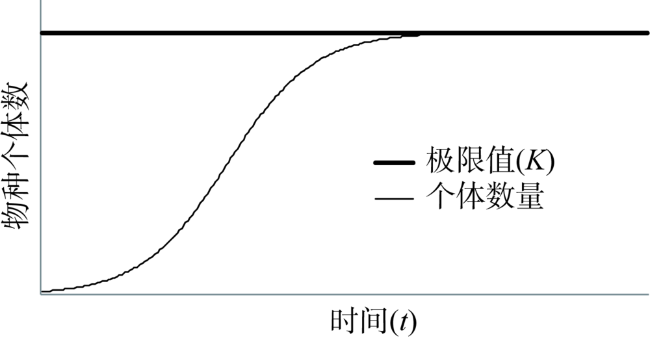
Fig. 1 Growth limit and Logistic growth curve图1 增长极限和逻辑斯蒂增长曲线 |
Table 1 Comparison of research methods of carrying capacity表1 承载力研究范式比较 |
| 限制性因子评价 | 多因素综合评价 | 限制性因子+多因素复合评价 | |
|---|---|---|---|
| 研究系统 | 封闭系统 | 开放系统 | 存在无法流动要素的开放系统 |
| 研究假设 | 短板制约 | 要素联系与补偿 | 限制性因子+适宜性因子要素综合 |
| 研究目的 | 承载上限 | 区域综合发展能力 | 一定限制条件下的区域开发建设能力 |
| 影响因素 | 资源总量、人均消费量 | 指标体系、权重 | 指标体系、指标属性界定、权重 |
| 评价属性 | 增长极限 | 区域综合发展能力 | 适宜性评价 |
| 评价类型 | 总量评价 | 状态评价 | 空间评价 |
| 评价单元 | 封闭单元 (一般为较大空间尺度) | 开放系统 (一般以行政区为主) | 公里网格、宗地等较小地域单元 |
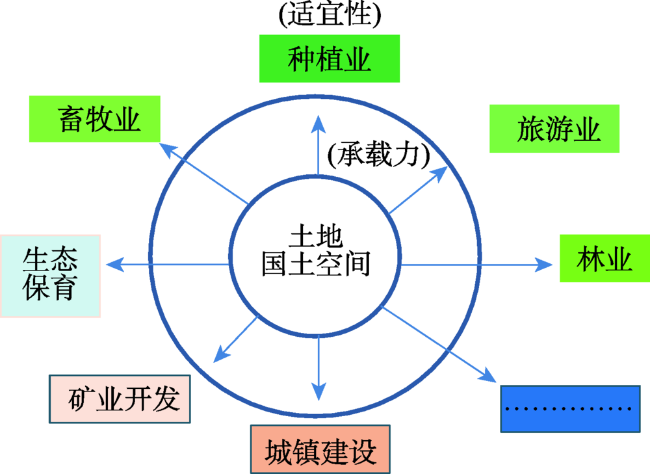
Fig. 2 Logical relationship between carrying capacity and suitability图2 承载力与适宜性逻辑关系 |
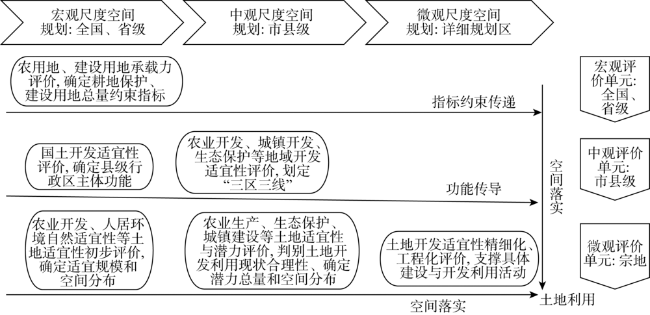
Fig. 3 Carrying capacity evaluation framework system图3 承载力评价框架体系 |
Table 2 The method and application of carrying capacity evaluation表2 承载力和适宜性评价方法及应用 |
| 承载力名称 | 评价单元 | 评价范式 | 应用方向 |
|---|---|---|---|
| 农地人口承载力 | 整个区域 | 限制性因素法 | 总量指标约束 |
| 国土空间开发适宜性 | 次级区域 | 多因素综合法 | 空间发展指引 |
| 土地开发建设适宜性 | 土地(栅格) | 复合型评价法 | 强制性空间管制 |
| …… | …… | …… | …… |
| [1] |
[
|
| [2] |
[
|
| [3] |
[
|
| [4] |
[
|
| [5] |
|
| [6] |
|
| [7] |
|
| [8] |
|
| [9] |
|
| [10] |
|
| [11] |
|
| [12] |
|
| [13] |
|
| [14] |
|
| [15] |
|
| [16] |
|
| [17] |
|
| [18] |
[
|
| [19] |
[
|
| [20] |
|
| [21] |
|
| [22] |
|
| [23] |
|
| [24] |
|
| [25] |
[
|
| [26] |
|
| [27] |
|
| [28] |
|
| [29] |
[
|
| [30] |
|
| [31] |
[
|
| [32] |
|
| [33] |
[
|
| [34] |
[
|
| [35] |
[
|
/
| 〈 |
|
〉 |